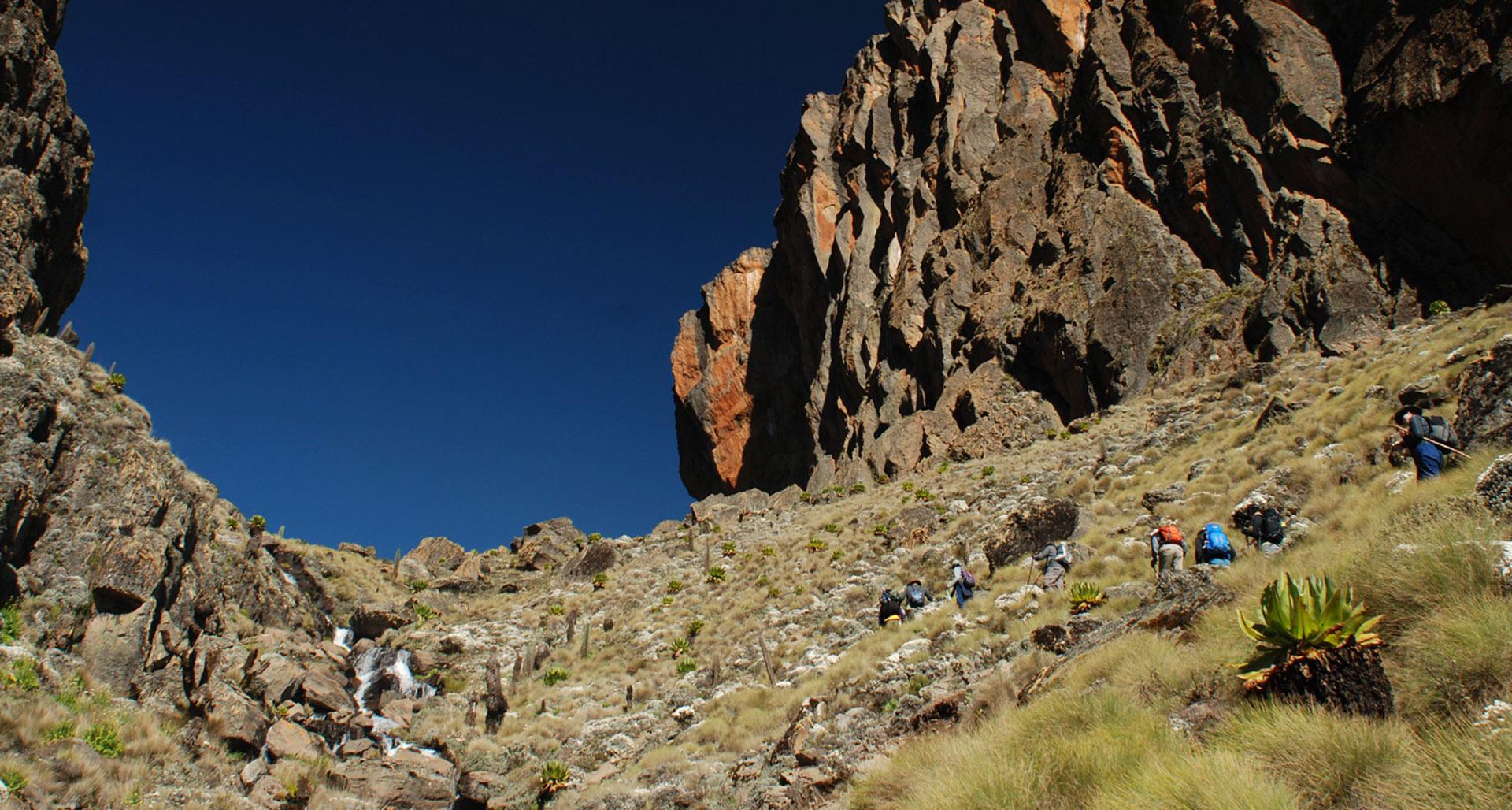
Mount Kenya presents an exceptional high-altitude trekking experience in East Africa. Of the various routes to its trekking summit, Point Lenana, the Sirimon Route offers the most gradual and scenic ascent.
Located on the mountain's drier north-western side, this path provides a steady elevation gain that contributes to high success rates for reaching the peak at 4,985 metres (16,355 feet).
A successful ascent on the Sirimon Route requires careful planning, an appreciation for the mountain's distinct ecological zones, and a profound respect for the effects of altitude.
This guide details the logistics, daily terrain, and accommodation to prepare both experienced trekkers and fit novices for the physical and mental demands of the journey.
The route moves through dense montane forest, expansive heather moorlands, and finally into the stark Afro-alpine zone.
By managing your pace and understanding the unique character of each stage, you can significantly improve your chances of watching the sunrise from Mount Kenya's third-highest peak.
A Typical Sirimon Route Itinerary
Most guided expeditions on the Sirimon Route are structured over four or five days. The five-day option, which includes an extra day for acclimatisation at Shipton's Camp, is highly recommended as it drastically increases summit success rates. The trek covers approximately 60 kilometres and involves significant altitude gain each day.
Day 1: Sirimon Gate (2,650m) to Old Moses Camp (3,300m)

The journey begins at the Kenya Wildlife Service's Sirimon Gate, just north of the equator. After completing park formalities, the first day involves a relatively gentle 9-kilometre hike to Old Moses Camp.
This walk takes between three and four hours through montane and bamboo forest, home to colobus monkeys, buffalo, and occasionally elephants.
The track transitions into expansive heather and protea-filled moorland, marking your entry into high-altitude terrain where the air becomes crisp and the views open up.
Day 2: Old Moses Camp (3,300m) to Shipton's Camp (4,200m)
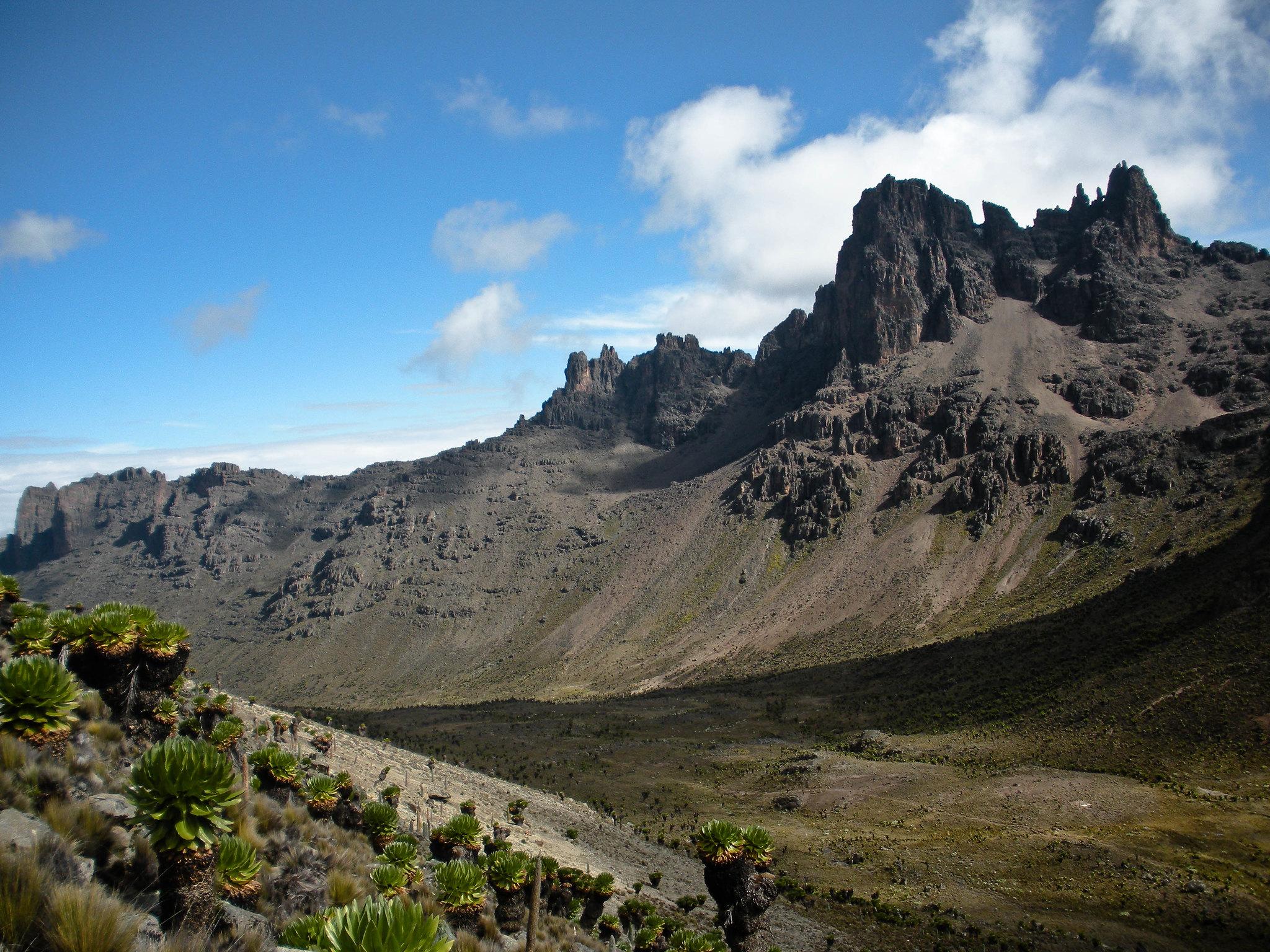
The second day is a long and visually rewarding trek to Shipton's Camp. Covering 14 kilometres, this section takes six to seven hours and presents a significant altitude gain of 900 metres.
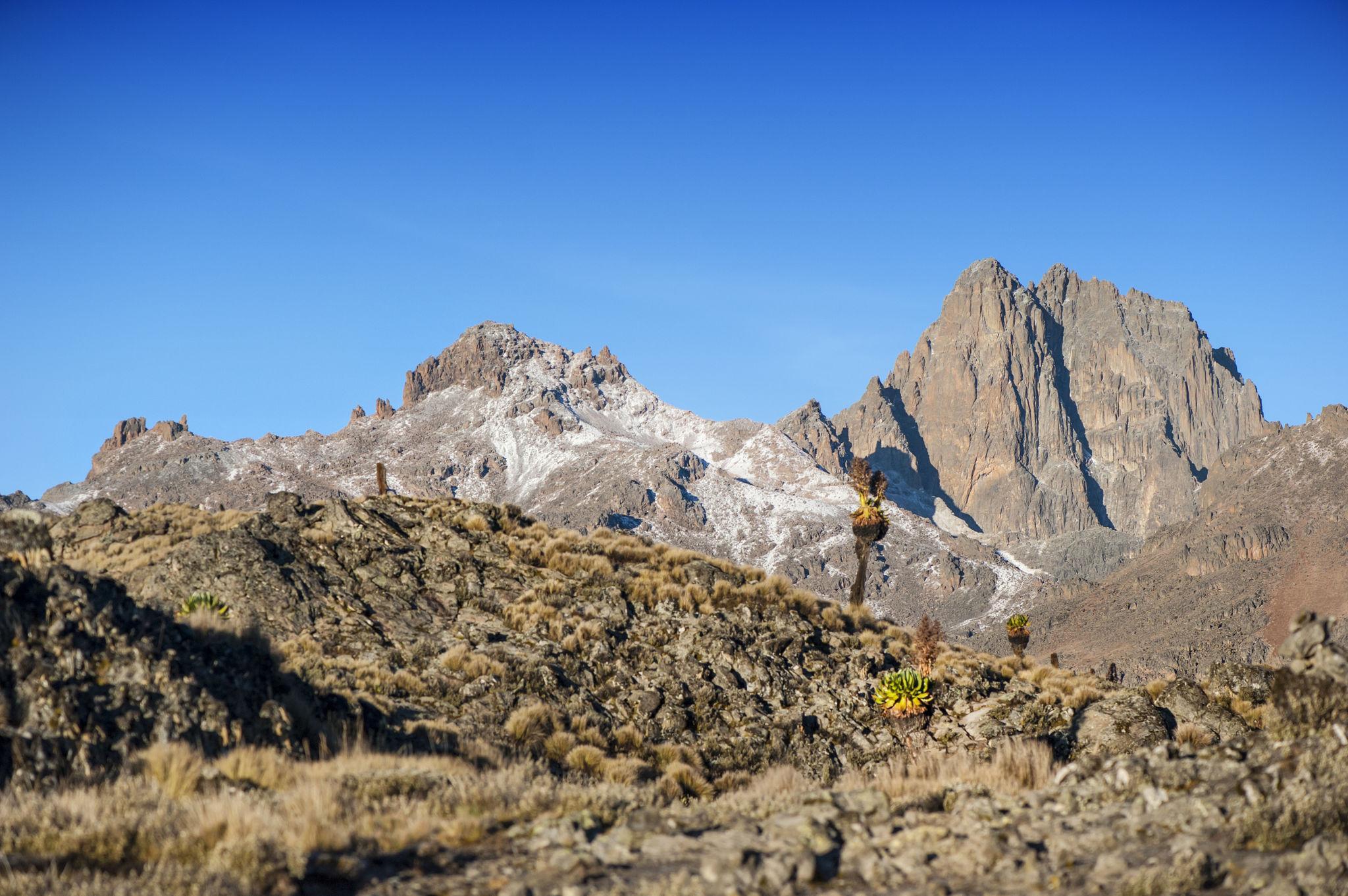
The path crosses the Ontulili River before ascending the ridge to the Mackinder Valley, a classic U-shaped glacial valley. The terrain here is dominated by unique Afro-alpine flora, including the giant groundsel (*Dendrosenecio keniodendron*) and lobelia (*Lobelia deckenii*).
You arrive at Shipton's Camp, situated directly beneath the formidable rock towers of Batian and Nelion, for your overnight stay.
Day 3: Acclimatisation at Shipton's Camp (4,200m)
On a five-day itinerary, this day is dedicated to acclimatisation. The principle of "climb high, sleep low" is applied by taking a three-to-four-hour return hike up towards the Hausberg Col at 4,600 metres.
This walk not only aids your body's adaptation to the reduced oxygen levels but also offers spectacular close-up views of the main peaks. Returning to Shipton's Camp for the afternoon allows for rest and energy conservation before the summit attempt.
Day 4: Summit Push to Point Lenana (4,985m) and Descent
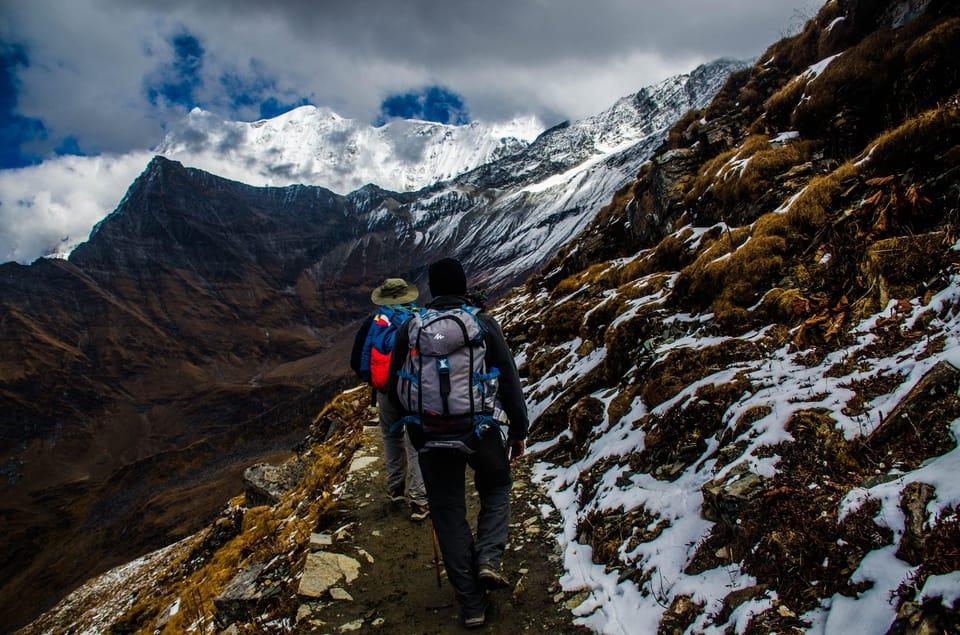
The summit attempt necessitates an alpine start. Guides enforce a 3:00 AM departure to navigate the steep terrain and frozen scree slopes before sunrise.
The climb is challenging and breathless in the thin air, but the reward is reaching Point Lenana as the sun rises over the African plains. On a clear morning, views extend as far as Mount Kilimanjaro.
After celebrating at the summit, the descent begins. Trekkers typically return to Old Moses Camp for the night, a long day covering significant distance, or descend via the scenic Chogoria Route on a different itinerary.
Sirimon Route Difficulty and Fitness
While the Sirimon is considered a non-technical trekking route, it remains a serious high-altitude undertaking.
Reaching Point Lenana requires no rock climbing skills or specialised equipment like ropes. The primary challenges are the altitude and the physical stamina required for consecutive days of hiking.
Physical Fitness Requirements
Cardiovascular fitness, focusing on leg strength and endurance, is the foundation of a successful trek. Prospective climbers should engage in regular hiking on varied terrain, running, or cycling in the months prior to their trip.
The trail varies from established forest tracks to loose gravel and rocky scree, demanding good balance and core strength. Arriving physically unprepared can lead to exhaustion in the Mackinder Valley, compromising your summit attempt.
Mental Preparation for High Altitude
Mental resilience is as important as physical conditioning. The final ascent occurs in darkness and sub-zero temperatures.
Being prepared to manage the discomfort of cold and shortness of breath is often the deciding factor. A positive and determined mindset helps climbers push through difficult moments and focus on the achievable goal of the summit.
Essential Gear for the Sirimon Route
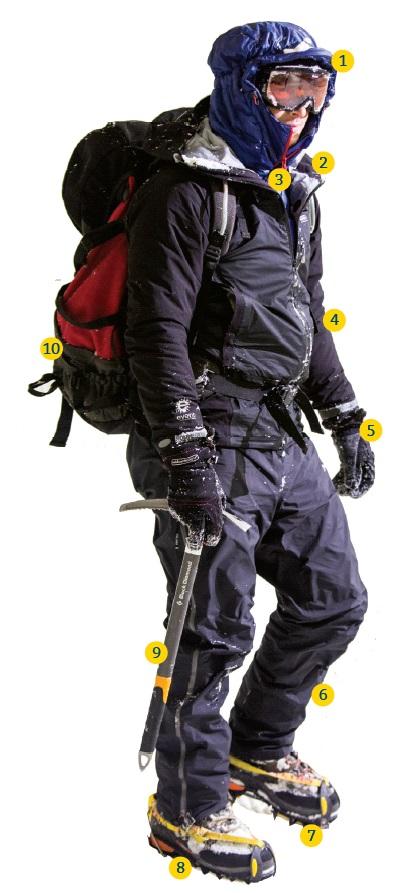
Packing correctly is critical due to the extreme temperature fluctuations, which can range from over 20°C at the gate to below -10°C on the summit.
Layered Clothing System
A layered clothing system is non-negotiable for managing temperature and moisture. Base layers must be synthetic or Merino wool to wick sweat from the skin; cotton is unsuitable as it retains moisture and chills the body.
Insulating mid-layers, such as fleece jackets, provide warmth. A high-quality waterproof and windproof outer shell (jacket and trousers) and a thick down jacket are essential for the cold evenings and the final ascent.
Essential Footwear and Accessories
A pair of sturdy, waterproof hiking boots with good ankle support is your most important piece of gear. The boots must be well broken-in to prevent blisters. Quality wool hiking socks add cushioning and warmth.
Key accessories include a powerful headtorch with spare batteries for the night-time summit climb, UV-protection sunglasses, a high-SPF sun cream, and a wide-brimmed hat or cap for sun protection.
Trekking poles are highly recommended to reduce strain on the knees, particularly during the long descent.
Sirimon Route Accommodation and Facilities
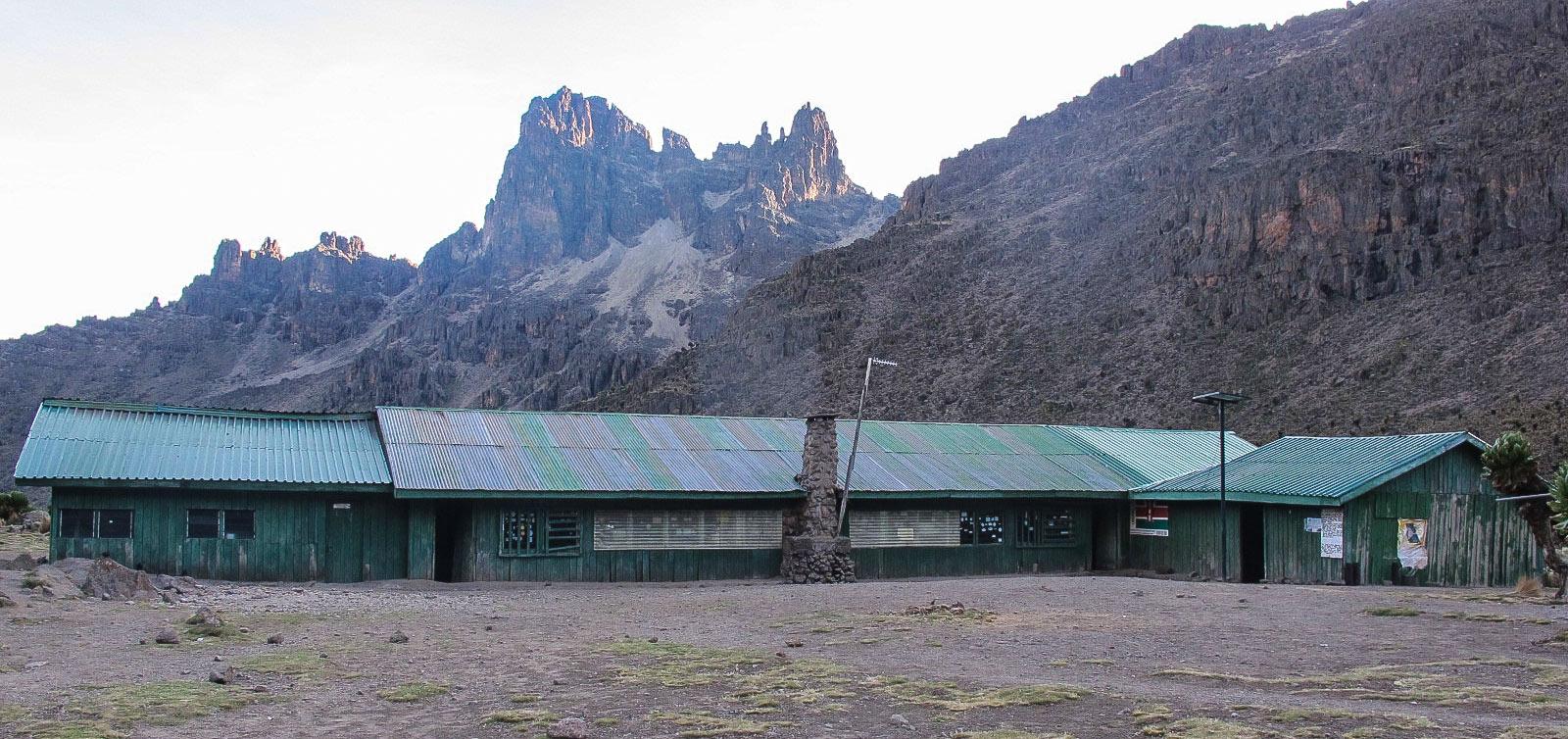
Accommodation on the Sirimon Route consists of mountain huts with dormitory-style bunks, offering a solid structure against the elements. The facilities and comfort levels vary between the camps.
Old Moses Camp (3,300m) is the first stop and serves as a comfortable introduction to mountain life. The huts are relatively well-maintained and often have running water and basic flush toilets. It provides a communal dining area where trekkers and guides share meals.
Shipton’s Camp (4,200m) offers a more basic and rugged experience. Due to its high altitude and position in the shadow of the main peaks, it is significantly colder. Accommodation is in a large communal bunkhouse.
Facilities are limited to pit latrines, which can be a short walk from the main hut. Water is sourced from a local stream and must be purified or boiled before drinking. Trekkers should carry their own toilet paper, hand sanitiser, and wet wipes.
Best Trekking Season and Typical Costs
The timing of your trek and understanding the associated costs are crucial components of your planning.
Optimal Climbing Windows
The best times to climb Mount Kenya are during the two dry seasons: January to February and August to September. These periods offer the highest probability of clear skies, stable weather, and good trail conditions.
January and February are often slightly warmer, which can make the pre-dawn summit push more manageable. Trekking during the rainy seasons (March to May and October to December) is possible but involves navigating muddy trails and obscured views.
Understanding Sirimon Route Costs
A professionally organised 4 or 5-day Sirimon trek can cost between $700 and $1,200 USD per person. This price typically includes:
- Kenya Wildlife Service (KWS) park entrance and conservation fees.
- Certified professional guides, a cook, and porters.
- Hut accommodation fees.
- All meals on the mountain.
- Return transport from a nearby town like Nanyuki to the park gate.
Proper Acclimatisation on the Sirimon Route
Acute Mountain Sickness (AMS) is the most significant barrier to reaching Point Lenana. The Sirimon Route's gradual profile helps, but the 900-metre altitude gain from Old Moses to Shipton's Camp is substantial.
The most essential principle is to walk slowly, or "pole pole" as it is known in Swahili. If you find yourself out of breath, you are moving too quickly.
Proper hydration is vital for acclimatisation. Trekkers should consume at least three to four litres of water per day. The dry, cold air at altitude causes rapid dehydration.
Mild headaches are common, but if symptoms progress to nausea, dizziness, or severe fatigue, you must inform your guide immediately. The only effective treatment for moderate to severe AMS is immediate descent.
Navigating Unpredictable Conditions on the Sirimon Route
The mountain environment is inherently unpredictable, and weather can change from bright sunshine to hail within minutes. Mental flexibility is key. Your guide's primary responsibility is your safety, so trust their judgement if conditions become hazardous. The summit is a goal, not a guarantee.
During the dark ascent to Point Lenana, the appearance of several "false summits" can be demoralising. To manage this, focus on short-term, achievable goals, such as reaching the next notable rock formation or completing a set number of steps before a short rest. This strategy helps maintain morale.
The descent from the summit requires as much concentration as the ascent. Legs are tired, and the loose scree poses a slip hazard.
Using trekking poles provides stability and transfers a significant amount of strain from your knees to your upper body, reducing the risk of injury on the long walk down.
Sirimon Route Key Facts
| Attribute | Detail |
|---|---|
| Route Name | Sirimon Route |
| Highest Point | Point Lenana - 4,985 metres (16,355 feet) |
| Typical Duration | 4 to 5 Days |
| Total Distance | Approx. 60 kilometres (37 miles) round-trip |
| Difficulty | Strenuous high-altitude trek; non-technical |
| Best Seasons | January-February & August-September |
| Accommodation | Mountain Huts (Old Moses & Shipton's) |
Final Checklist for Your Sirimon Route Trek
In the final days before your trip, your focus should be on rest, hydration, and final equipment checks. Ensure your hiking boots are comfortable and your daypack is organised.
Pack all clothing and electronics in waterproof dry bags inside your main duffel. Eat a diet rich in carbohydrates the day before the trek begins.
The journey to Point Lenana via the Sirimon Route is a demanding and hugely rewarding adventure through one of Africa's most stunning alpine environments.
By preparing your body, respecting the altitude, and packing appropriate gear, you position yourself for an unforgettable experience. Standing on the summit as the sun illuminates the continent below is a profound achievement earned through perseverance and preparation.