To photograph elephants against Mount Kilimanjaro, you must shoot before 10:00 AM, use a telephoto lens of 200mm or longer, and position yourself in a location like Kitirua Conservancy or near the Amboseli swamps.

The key technical and logistical challenges include the mountain's limited visibility, the physics of lens compression, and specific park regulations.
Success depends on timing, equipment selection, and location choice within the Amboseli ecosystem.
The Reality of Capturing the Iconic Tusker Shot
The classic image of a large tusker elephant set against a snow-capped Mount Kilimanjaro is a product of specific environmental conditions and photographic techniques.
Many photographers arrive in Amboseli National Park unprepared for these realities. The mountain is often obscured by clouds, the elephants appear small against the vast backdrop without the right lens, and prime shooting angles are inaccessible from standard park roads.
Achieving this shot requires a deliberate strategy that accounts for weather, optics, and local geography.
Beat the Ten AM Cloud Curtain
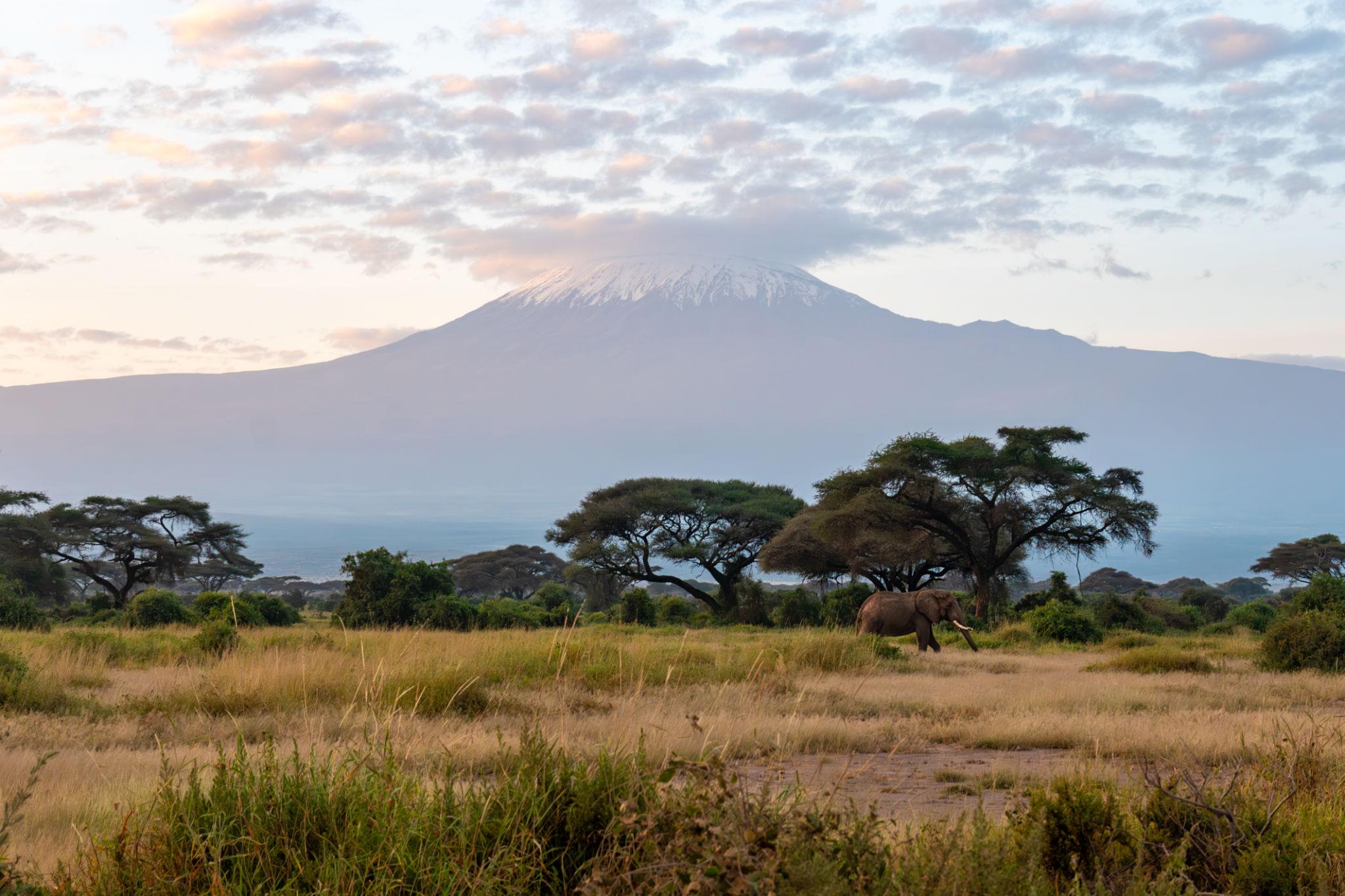
Mount Kilimanjaro has a predictable daily weather pattern that dictates all photography schedules. The mountain is typically clear at sunrise but becomes completely obscured by a "Cloud Curtain" by mid-morning.
This phenomenon is the single most important timing constraint for photographers.
Schedule Shoots Before the Mountain Vanishes
The highest probability for a clear view of Mount Kilimanjaro is between sunrise and 10:00 AM. Your game drives must be planned to be in a suitable photographic position during this short window.
After 10:00 AM, convective clouds form around the peak, and visibility drops to near zero for the rest of the day. The goal is to locate elephant herds moving into position while the mountain is still visible.
Capitalize on the Brief Evening Clearing
A secondary, less reliable window of opportunity occurs for about 30 to 60 minutes just before sunset. On some days, the late afternoon sun burns off the cloud cover, revealing the peak once more. This evening light offers warmer tones on the mountain's face. Planning for this possibility provides a second chance if the morning was unsuccessful, but it is not as consistent as the early morning window.
Create Massive Backgrounds With Lens Compression

The visual scale of Mount Kilimanjaro in a photograph is a direct result of lens compression. This optical effect makes distant objects, like the mountain, appear larger and closer to the foreground subject, the elephant, than they do to the naked eye.
Achieving this effect is purely a function of focal length and distance to the subject.
Leave the Wide Angle Lens in the Bag
A wide-angle lens (e.g., 16-35mm) will make Mount Kilimanjaro appear as a small, distant peak.
This type of lens exaggerates the distance between the foreground and background. For this specific photographic goal, wide-angle lenses produce the opposite of the desired effect.
They are unsuitable for making the mountain a dominant element in the composition.
Shoot at 200mm or Longer to Magnify the Peak

A focal length of 200mm is the minimum required to create significant background compression. Longer focal lengths, from 300mm to 600mm, are even more effective.
To apply this technique, position yourself far from the elephant and zoom in. This long focal length magnifies the distant Mount Kilimanjaro, making it fill the frame behind the elephant.
The greater the distance between the camera and the subject, the more pronounced the compression effect will be.
| Focal Length | Mountain's Apparent Size | Practical Application |
|---|---|---|
| 50mm | Small and Distant | Unsuitable for iconic shot; captures the scene as the eye sees it. |
| 200mm | Noticeably Larger | Minimum requirement; begins to compress the scene effectively. |
| 400mm+ | Large and Dominant | Ideal for making the mountain a massive, impactful backdrop. |
Select the Superior Vantage Point
The precise location you shoot from determines the final composition, especially the angle and potential for reflections. Access to off-road areas in private conservancies provides a distinct advantage over staying on the public roads within Amboseli National Park.
Get Low Angles in Kitirua Conservancy
Kitirua Conservancy, bordering the western side of Amboseli National Park, permits off-road driving for registered vehicles. This access is the only way to achieve low-angle shots.

Driving off the main tracks allows a photographer to position the camera at the elephant's eye level or lower. A low-angle perspective makes the elephant appear more formidable and separates its silhouette cleanly against the sky and mountain.
Line Up the Swamp Edge for Reflections
The swamps in central Amboseli offer a different compositional opportunity. During the wet season, or when water levels are high, positioning along the swamp edge can create reflections of both the elephants and Mount Kilimanjaro.
This requires careful alignment and calm conditions. The main park roads provide some access to these areas, but the best angles often require finding a specific clearing along the water's edge.
Track the Daily Elephant Migration Routes
Amboseli's elephants follow a general daily migration pattern. They move from the forested areas near the mountain's foothills in the morning towards the central swamps to drink and feed. Understanding this route is key to anticipating their position for a photograph.
Intercept Herds Crossing the Dry Lake Bed
The dry lake bed is a prime location for photography. In the morning, herds often cross this vast, open plain on their way to the swamps. The fine alkaline dust, unique to Amboseli, gets kicked up by their feet, catching the golden hour light and creating atmospheric effects. By predicting their path, a vehicle can be positioned ahead of the herd to capture them as they walk towards the camera with Mount Kilimanjaro behind them.
Pack the Correct Gear for Amboseli Conditions
The environment in Amboseli is harsh on photographic equipment. The primary threat is the pervasive, fine-grained alkaline dust from the dry lake bed. Protecting your gear is a logistical necessity.
- Camera Bodies: Bring at least two camera bodies. This reduces the need to change lenses in the dusty environment.
- Lens Selection: A telephoto zoom (e.g., 100-400mm or 200-600mm) is the most versatile tool. A fixed super-telephoto (400mm, 500mm, or 600mm) offers the best image quality.
- Support: A beanbag is more practical in a safari vehicle than a tripod. It provides a stable platform on a window frame or roof rail.
Protect Equipment from Fine Alkaline Dust
The dust in Amboseli is corrosive and fine enough to penetrate lens mechanisms and camera sensors. Keep equipment in a sealed camera bag when not in use.
Use lens hoods to protect the front element. Clean gear meticulously every evening with an air blower and microfiber cloths. Avoid changing lenses in open, dusty conditions whenever possible.
Best Months to Book Your Photo Expedition
The best time to photograph elephants against Mount Kilimanjaro is during the dry seasons. These periods offer the highest probability of clear skies and better visibility for the mountain. The two primary windows are from June to October and from January to February.
- June - October (Long Dry Season): This is the peak season. The sky is generally clear, and the dust from the dry lake bed adds atmosphere to morning and evening light. Wildlife concentrates around the swamps, making elephant herds easier to find.
- January - February (Short Dry Season): This is another excellent period. Conditions are similar to the long dry season but with fewer tourists. The landscape is often greener following the short rains, providing a different aesthetic.
The rainy seasons (March-May and November-December) present challenges. While the scenery is lush, cloud cover is persistent, and Mount Kilimanjaro may not be visible for days at a time. Roads can also become impassable.