The best locations to find the famous red elephants in Tsavo East National Park are concentrated along the Galana River circuit and its key watering holes.
These are not a distinct species, but African elephants whose striking terracotta colour comes from their regular habit of dust bathing in the region's iron-rich laterite soil, a unique spectacle for UK travellers on a Kenya safari.
Why Tsavo's elephants appear red
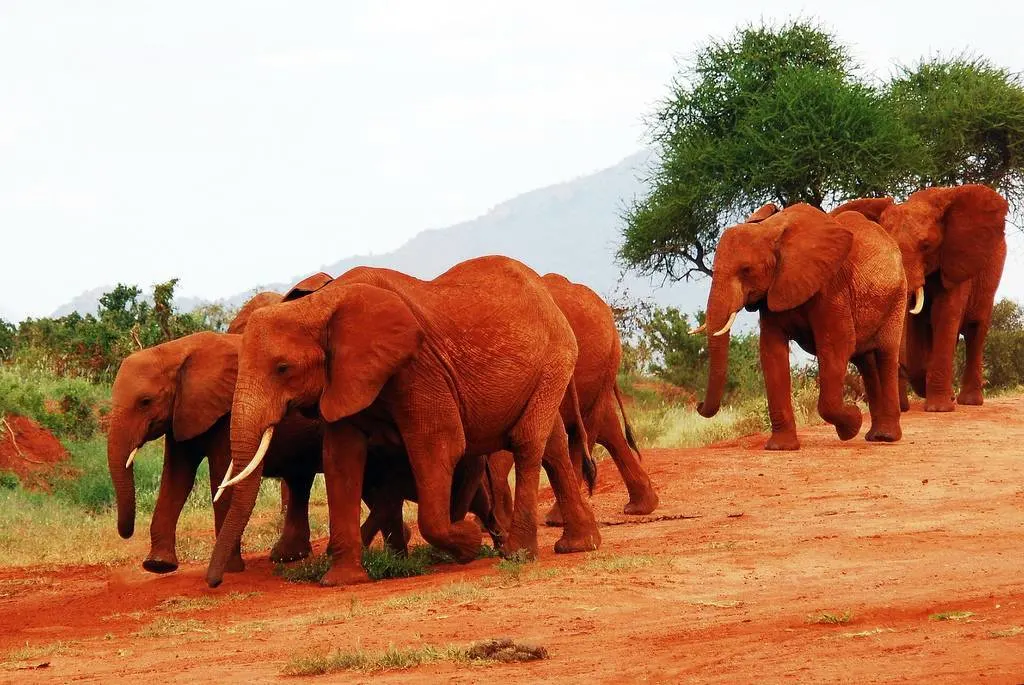
The distinctive red colouring of Tsavo's elephants is a direct result of their environment and behaviour. The soil throughout Tsavo East is a form of laterite, a reddish clay-like earth rich in iron oxide. This rust-coloured dust is fine and pervasive across the park's arid terrain.
Elephants intentionally cover themselves in this soil through a process known as dust bathing. They use their trunks to spray clouds of the red dust over their bodies, coating their thick, grey skin.
This serves as a protective layer, acting as a natural sunblock against the harsh equatorial sun and as an effective insect repellent. This deliberate, functional coating of laterite soil gives the elephants their famous appearance.
Prime safari routes for Tsavo East's red elephants
To increase the chances of observing these animals, your safari itinerary should focus on areas that provide consistent access to water and the mineral-rich soil they favour. The lifeblood of the park, the Galana River, forms the central axis for the most reliable sightings.
The game drive circuits that follow the course of the Galana River are the most productive. This riverine environment not only guarantees a water source but also features exposed banks of the red soil.
Guides typically patrol these routes, knowing that elephant herds must come to the river to drink, bathe, and dust themselves. Key congregation points along this circuit offer exceptional viewing opportunities.
Aruba Dam and Kanderi Swamp
Aruba Dam, a large man-made waterhole, is one of the most famous landmarks in Tsavo East for wildlife viewing. During the dry seasons, it becomes a critical water source that attracts large herds of elephants, often numbering in the hundreds.
The surrounding plains provide ample red earth for dusting. Kanderi Swamp, a vast marshland, acts as another permanent water source, drawing elephants and a great variety of other wildlife, especially when other parts of the park are dry.
Lugard Falls and the Galana River Banks

The area around Lugard Falls offers a different but equally rewarding experience. Lugard Falls is not a true waterfall but a series of rapids that cascades through colourful, eroded rock formations. The river banks here are a frequent haunt for elephants coming to drink.
A game drive along the Galana is often punctuated by sightings of family herds making their way down the steep, red banks to the water's edge. This area also provides a chance to see crocodiles, hippos, and a variety of water birds alongside the red elephants.
How red elephants perform a dust bath
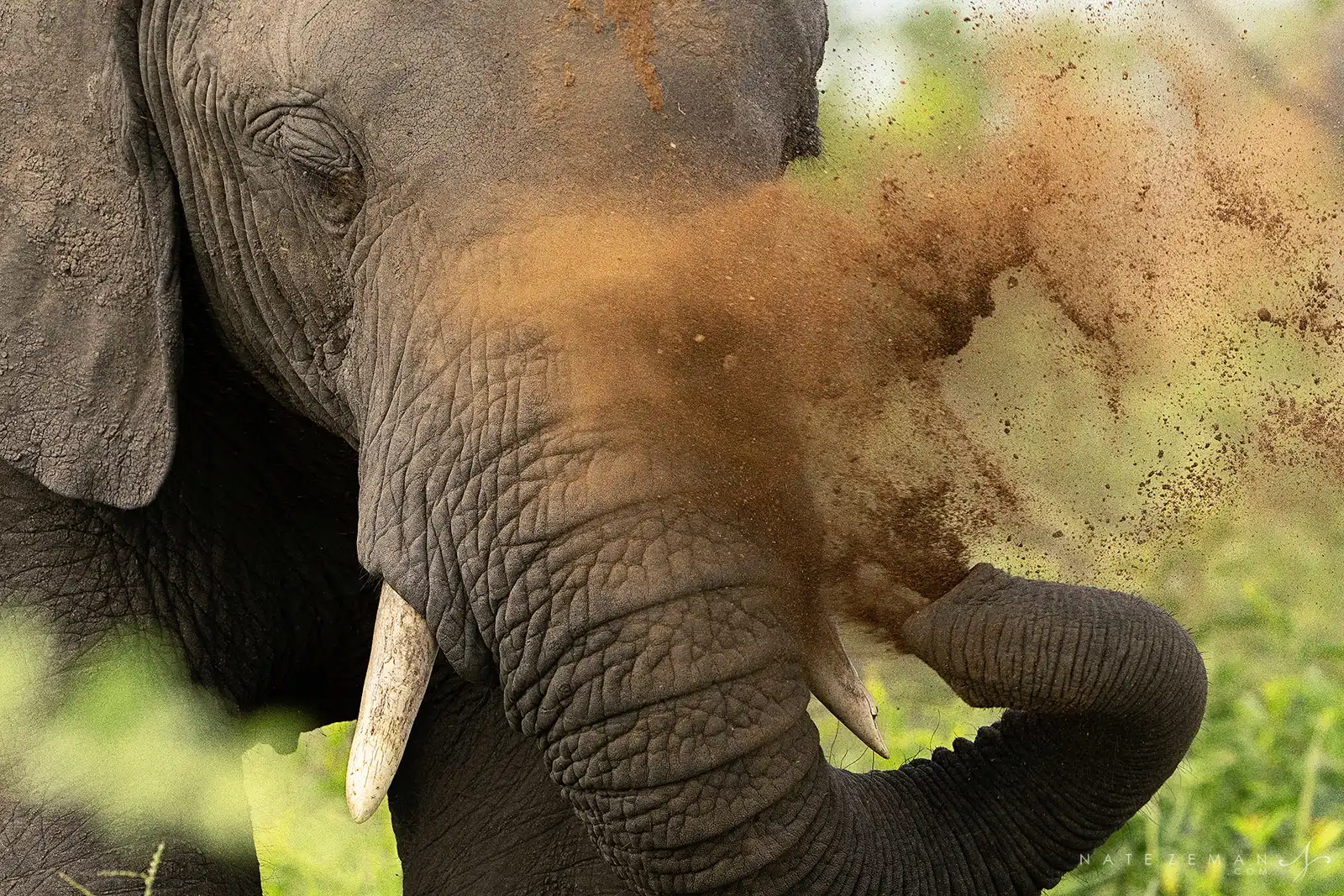
The iconic red colour results from a specific, observable behaviour adapted to Tsavo's arid climate. Elephants in other regions often take mud baths, but Tsavo’s herds have perfected the dust bath.
A mud bath cools the skin and forms a thick crust against insects; a dust bath achieves the same goals in a water-scarce environment. The fine laterite soil acts as a powerful sunblock and insect repellent, and its high iron content can help with skin healing.
On safari, you can often witness the full sequence. Elephants first drink and spray themselves with water along the Galana River or at a waterhole. Then, with their skin still damp, they move to a dry patch of earth and use their trunks to blast clouds of red laterite dust over their bodies.
The moisture helps the dust adhere, creating the terracotta coating. Watching a breeding herd, including tiny calves, participate in this social and functional ritual is a defining Tsavo experience.
Best time to see Tsavo's red elephants
UK travellers planning a safari will find that timing is key for maximising red elephant sightings. The most reliable periods are Kenya's two dry seasons: the long dry season from June to October and a shorter one from January to February. During these months, the scarcity of water across the park forces elephant herds to congregate predictably around permanent water sources.
Your game drives should be concentrated along the Galana River, Aruba Dam, and Kanderi Swamp, where sightings are highly reliable. Daily, the best viewing times are during the cooler hours of the early morning (approx. 6:30-9:30 am) and late afternoon (approx. 4:00-6:30 pm).
Elephants are most active during these periods, moving to and from water. The low, golden light at these times also accentuates their red colour, offering dramatic photographic opportunities.
Why an expert guide important for red elephant sightings
The value of an experienced safari guide is significant. Shifting rainfall patterns can impact water levels and vegetation growth, so the precise day-to-day movements of elephant herds can be less predictable. A knowledgeable local guide possesses an intimate understanding of these subtle changes.
Guides can interpret fresh tracks, understand the current state of seasonal waterholes, and communicate with other guides in the park to locate the herds. Their expertise transforms a drive into a purposeful search, increasing your chances of a meaningful and ethically conducted encounter.
They ensure you maintain a safe and respectful distance, allowing you to observe natural behaviour without disturbing the animals.
Photographing Tsavo's red elephants
A few specific camera settings can help capture the unique terracotta hue of Tsavo's elephants. UK travellers with DSLR or mirrorless cameras can use these tips:
- Use Golden Hour Light: The soft, warm light of early morning and late afternoon enriches the red tones of the laterite dust and avoids harsh midday sun.
- Use a Fast Shutter Speed for Action: To freeze the motion of an elephant spraying dust, use Shutter Priority (Tv/S) mode and set a speed of at least 1/800s. This ensures a sharp image of the dust cloud.
- Control Depth of Field: Use Aperture Priority (Av/A) mode with an aperture of f/5.6 to f/8. This will keep the elephant sharp while gently blurring the background.
- Manage Your ISO: In low light, increase your ISO to 800 or 1600 to maintain a fast shutter speed. Modern cameras handle this level of sensitivity well.
- Shoot from a Low Angle: A lower angle can make the elephant appear more majestic against the sky or terrain, where it is safe and practical to do so.
- Use a Long Lens: A lens of 300mm or more allows for frame-filling shots without disturbing the animals, which is a key part of ethical photography.
Lodges best situated for red elephant viewing
A strategically located lodge is critical for maximising game-viewing time near red elephant hotspots. The right choice depends on your travel style, whether for a family holiday, a romantic honeymoon, or a classic safari adventure.

Ashnil Aruba Lodge offers an unbeatable location for families and first-time safari-goers, as it overlooks the Aruba Dam. Its solid construction, swimming pool, and prime position mean you can watch large herds of elephants from the lodge itself.
Satao Camp is an excellent choice for a more authentic, tented-camp experience. It is situated amongst tamarind trees and surrounds a busy waterhole that acts as a magnet for elephants.
Galdessa Camp is ideal for honeymooners or travellers seeking a more exclusive setting. This small, eco-friendly camp is situated on the banks of the Galana River and offers a sense of seclusion.
Its location provides immediate access to the prime riverine game drive circuits and it is known for its quality guiding.
Planning a Tsavo East safari from the UK
UK travellers can begin planning a successful safari to Tsavo East by choosing a specialist tour operator. Look for companies that are ATOL and ABTA protected for financial security and have first-hand knowledge of Kenya. A good operator will tailor your itinerary to your interests, such as a dedicated wildlife photography trip or a family adventure.
A focused red elephant experience requires a minimum of three nights in Tsavo East. The park's immense size means that a shorter stay can feel rushed. Tsavo East is also perfectly positioned for a 'bush and beach' holiday.
You can combine your safari with a stay on Diani Beach, accessible via a short flight from a local airstrip or a scenic drive. A comprehensive elephant safari could also start in Amboseli National Park to see elephants against the backdrop of Mount Kilimanjaro, before travelling to Tsavo East. [Contact us to plan your Kenya safari]
Red Elephant Safari Key Facts
| Aspect | Detail | Recommendation |
|---|---|---|
| National Park | Tsavo East, Kenya | Largest national park in Kenya. |
| Prime Locations | Galana River, Aruba Dam, Kanderi Swamp | Focus game drives around these permanent water sources. |
| Best Travel Months | June-October & Jan-Feb | These dry seasons concentrate wildlife near water. |
| Minimum Stay | 3 Nights | Allows sufficient time to explore the vast park. |
| Safari Combination | Amboseli (elephants) & Diani (beach) | Creates a classic "bush and beach" itinerary. |
How your safari contribute to elephant conservation
Your trip to Tsavo East supports the long-term survival of its red elephants. The park fees you pay are a primary source of funding for the Kenya Wildlife Service, directly supporting anti-poaching patrols, habitat management, and community conservation projects. A reputable safari operator ensures your visit supports an ecosystem of responsible tourism that values wildlife and local employment.
During your safari, you become a partner in conservation. Adhering to ethical viewing guidelines is a priority. Trust your guide’s expertise on maintaining a respectful distance, keep your voice low to avoid causing stress, and never ask your driver to crowd an animal.
These practices ensure the elephants' behaviour remains natural and undisturbed. Your responsible actions contribute to a sustainable tourism model that helps protect the red elephants of Tsavo for future generations.