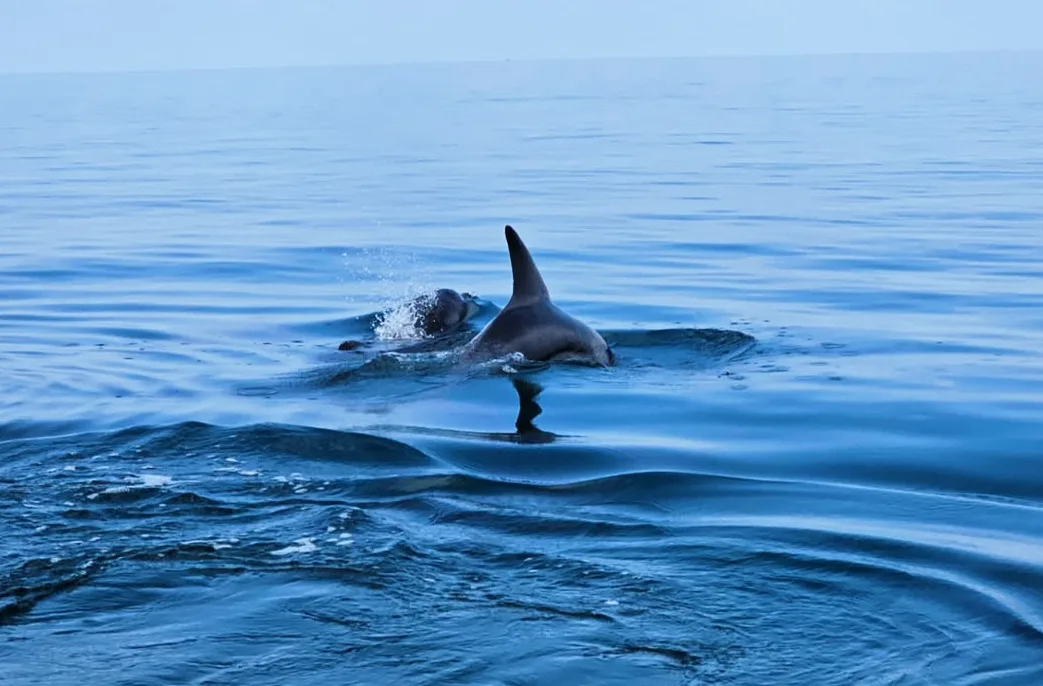
Kisite Mpunguti Marine Park is a marine national park and reserve in Shimoni, Kwale County, Kenya. Known for its dhow safaris, the park offers opportunities for dolphin spotting, snorkelling, and diving among its vibrant coral gardens and diverse marine life.
39 km² (Kisite Park: 28 km²; Mpunguti Reserve: 11 km²)
Entry fees
Varies for Citizens, Residents, & Non-Residents. Consult the official KWS tariff.
Primary attraction
Dolphin watching, snorkelling, traditional dhow excursions, and coral reef ecosystems.
Best time to visit
The dry seasons (June to October and January to February) offer the calmest seas and best visibility for marine activities.
Marine Biodiversity and Ecosystem
The Kisite Mpunguti complex has ecological importance due to its dual-status designation. Kisite Park operates as a strict 'no-take' zone, prohibiting all extraction.
The surrounding Mpunguti Reserve functions as a buffer zone, allowing regulated artisanal fishing. This structure supports a dense concentration of marine life not found in less protected Kenyan waters.
The absence of major river outlets near Shimoni reduces sediment runoff. This results in water clarity supporting diverse trophic levels. The ecosystem sustains over 250 recorded fish species and serves as an important feeding ground for pelagic predators. Key inhabitants include:
Sea Turtles: Resident Green Sea Turtles (Chelonia mydas) and Hawksbill Turtles (Eretmochelys imbricata) frequently forage on the seagrass beds adjacent to the reef.
Ray Species: Blue-spotted Ribbontails and large Southern Stingrays inhabit the sandy channels between coral heads.
Predatory Fish: Giant Groupers, Barracuda, and Trevally patrol the reef edge, benefiting from the spillover effect of the protected zone.
Dolphin and Whale Watching at Kisite Mpunguti
Kisite Mpunguti differs geographically from Diani or Malindi because cetaceans are permanently present. Other coastal areas rely on chance sightings. However, the Shimoni Archipelago supports resident pods, giving the park the name "Home of the Dolphin."
The protected waters provide a calm nursery environment, specifically for:
Indo-Pacific Bottlenose Dolphins: The most commonly sighted species, often observed in pods of 20 to 100 individuals engaging in social behaviours within the Wasini Channel.
Humpback Dolphins: A shyer species found closer to the shoreline and mangrove estuaries.
Spinner Dolphins: Known for acrobatic displays, typically encountered in deeper waters beyond the fringing reef.
Migratory Activity: Between July and October, the Antarctic migration brings Humpback Whales (Megaptera novaeangliae) through the Pemba Channel. This corridor serves as a mating and calving ground, offering opportunities to observe breaching and lobtailing distinct from the resident dolphin populations.
Snorkelling and Diving Experiences
The underwater topography of Kisite sets it apart from the northern Kenyan coast. The reef profile is shallow, with the top reef sitting at depths of 2 to 8 metres during low tide. This makes it particularly suitable for snorkelling compared to the deep drop-offs found in Watamu.
For SCUBA divers, the outer reef slopes descend to between 12 and 30 metres. The currents in the Mpunguti channel allow for drift diving. Divers can cover extensive reef sections with minimal exertion. Prominent dive sites include:
Kisite Point: Located at the southern edge, featuring strong currents and high densities of pelagic fish.
Inner Kisite: A sheltered area with minimal current, ideal for macro photography and novice divers.
Harm’s Drop-off: A wall dive characterised by large gorgonian fans and schooling snapper.
Coral Reefs and Underwater Landscapes
The park encompasses four small, arid islets surrounded by a fringing reef system. The Kenya Wildlife Service (KWS) closely monitors coral health in Kisite because of its resilience to recent bleaching events that affected other Western Indian Ocean reefs. This biological structure creates a complex habitat for invertebrates and juvenile fish.
The benthic composition is dominated by:
Hard Corals: Extensive colonies of Staghorn (Acropora), Porites, and Brain Coral form the structural backbone of the reef.
Soft Corals: Leather Corals and Dendronephthya add texture to the reef walls.
Invertebrates: Giant Clams (Tridacna), Sea Cucumbers, and various species of Nudibranchs occupy the substrate.
Bird Watching Opportunities
Kisite Island is an Important Bird Area (IBA). The island is a flat, treeless rock that remains exposed during high tide. It provides a predator-free breeding ground for pelagic seabirds. Unlike the forested mainland, this rocky outcrop supports colonies that rely on the surrounding marine resources.
Ornithological surveys highlight the presence of:
Roseate Terns: These birds form large breeding colonies on the island annually.
Sooty Terns: Often seen in mixed flocks with Roseate Terns.
Crab-Plovers: Identifying winter visitors that use the exposed sandbars.
Migratory Waders: The sandspits surrounding the Mpunguti islands attract Curlew Sandpipers and Grey Plovers during the northern winter.
The lack of terrestrial vegetation limits bush birds and maximises visibility for observing marine avian behaviour, specifically foraging and nesting cycles.
Kisite Mpunguti Marine Park Entry Fees and Costs
Entrance to Kisite Mpunguti Marine Park is managed by the Kenya Wildlife Service (KWS). Fees are structured to differentiate between Kenyan Citizens, East African Residents, and Non-Residents. Payments are typically made via mobile money (M-Pesa) or credit/debit card, as cash is often not accepted at the gate.
The table below outlines the standard 24-hour conservation fees. These prices are subject to change and should be verified on the official KWS website before your visit.
KWS Conservation Fees (24-Hour Pass)
Category
Non-Resident
East African Resident / Kenyan Citizen
Adult
USD $15
KES 300
Child / Student*
USD $15
KES 200
*Child rates apply to persons aged 3 to 17. Students must provide a valid student ID.
Additional Costs to Consider
Dhow Tour Operator Fees: The park entrance fee is separate from the cost of your dhow tour. Most visitors book an all-inclusive day trip from Diani or Shimoni, which typically covers transport, the dhow, crew, lunch, snorkelling gear, and the KWS park fees.
Vehicle Entry: As the park is aquatic, there are no vehicle entry fees applicable.
Marine Activities: Activities like scuba diving may incur extra charges for equipment hire and a certified guide.
Getting to Kisite Mpunguti Marine Park
The journey to Kisite Mpunguti culminates at the small coastal village of Shimoni, the departure point for all dhow trips into the park. Your route will depend on your starting point, with most international visitors beginning in Nairobi or the tourist hub of Diani Beach.
From Nairobi (Approx. 550 km)
Reaching the south coast from Nairobi involves a multi-stage journey.
By Air (Recommended): The quickest and most convenient option.
Fly from Wilson Airport (WIL) in Nairobi to Ukunda Airstrip (UKA), which serves Diani Beach. Airlines like Safarilink and Jambojet operate daily flights (approx. 1 hour).
From Ukunda/Diani, take a pre-booked taxi or tour operator vehicle south to Shimoni (approx. 85 km, 1.5 - 2 hours).
By Train (SGR): A scenic and comfortable alternative.
Take the SGR (Standard Gauge Railway) train from Nairobi Terminus to Mombasa Terminus (approx. 5-6 hours).
From Mombasa, you will need road transport. This involves crossing the Likoni Ferry and then driving south to Shimoni (approx. 100 km, 2.5 - 3 hours, subject to ferry traffic).
By Road: A long but adventurous drive.
The entire journey follows the A109 Highway (Nairobi-Mombasa Road) to Mombasa, then continues south towards Lunga Lunga on the A14.
The drive can take over 10 hours, making it impractical for a short trip but feasible for a multi-day road trip.
From Diani Beach (The Final Leg)
Most visitors use Diani Beach as their base. The trip from Diani to Shimoni is a straightforward road journey south, passing through sugar cane plantations and small villages. This is almost always arranged as part of a packaged day tour, which includes hotel pick-up and drop-off.
Accommodation Options at Kisite Mpunguti
There is no accommodation within the marine park's protected boundaries. Your lodging strategy depends on the type of experience you seek, with choices primarily located on the mainland or the nearby Wasini Island.
Option 1: Staying in Diani Beach (Most Popular)
This is the most common approach for visitors. Diani Beach is a popular tourist destination with a wide range of accommodation options. It serves as the starting point for most organised day trips to Kisite Mpunguti.
Best For: Travellers wanting a full-service beach holiday experience with access to restaurants, nightlife, and other activities.
Logistics: Your tour operator will pick you up from your Diani hotel in the early morning for the drive to Shimoni and return you in the late afternoon.
Option 2: Staying in Shimoni (The Gateway Village)
Staying in Shimoni places visitors close to the departure point. It offers a more rustic and authentic coastal village experience, away from the main tourist crowds.
Best For: Divers, marine enthusiasts, and travellers seeking a quieter, more local atmosphere. Ideal for an early start to beat the crowds into the park.
Accommodation Types: A limited selection of charming guesthouses, eco-lodges, and a few established hotels like the Shimoni Reef Lodge.
Logistics: You can walk to the KWS jetty in the morning to meet your dhow captain.
Option 3: Staying on Wasini Island (A Unique Escape)
Located just across the channel from Shimoni and adjacent to the marine park, Wasini Island offers a unique, off-the-grid experience. There are no cars on the island, and life moves at a slower pace.
Best For: Adventurous travellers, couples seeking seclusion, and those interested in a genuine Swahili island culture experience.
Accommodation Types: Primarily rustic eco-lodges and community-run guesthouses that focus on sustainability.
Logistics: You will need to take a boat or dhow from Shimoni to reach your accommodation on Wasini. Your host will typically arrange this transfer.
Kisite Mpunguti Marine Park offers warm, humid tropical conditions year-round, ideal for marine activities when rainfall and sea state permit. The best times to visit are during the dry seasons: January to March, characterized by consistently high temperatures, lower rainfall, calm seas, and excellent underwater visibility for snorkeling and diving.