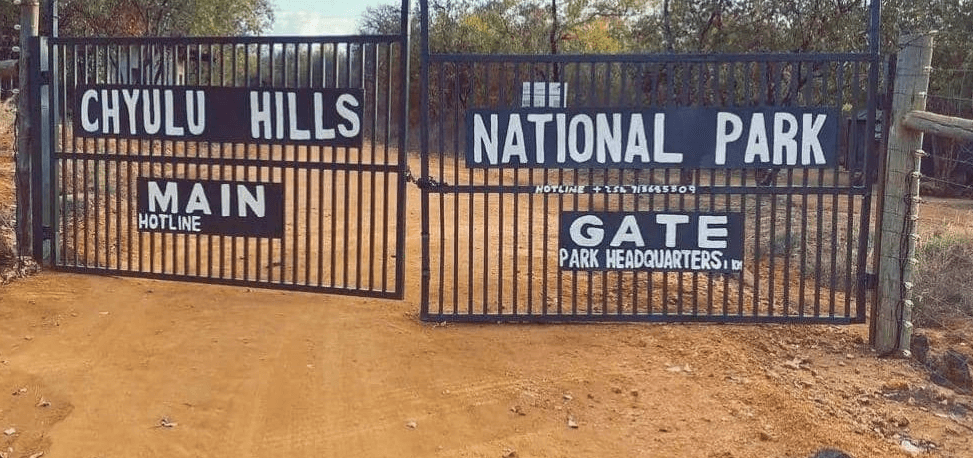
Chyulu Hills National Park is a national park in Southeastern Kenya, spanning Makueni and Kajiado Counties. The park is renowned for its verdant, rolling "Green Hills of Africa," formed by recent volcanic activity.
The park offers remarkable views of Mount Kilimanjaro, and visitors can explore the vast Leviathan lava tube system.
Overview
Name
Chyulu Hills National Park
Type
National Park
Town
Mtito Andei
Country
Kenya
Facts About Chyulu Hills Kenya
Attribute Category
Specific Detail
Location Coordinates
Approximately 2.6200° S, 37.8500° E
Governance/Management
Kenya Wildlife Service (KWS)
Total Area
741 square kilometres (286 sq mi)
Entry Fees
Varies by residency and age. See official KWS tariff.
Primary Attraction
Volcanic hills, Leviathan Cave (Kisula Caves), views of Mt. Kilimanjaro, cloud forests, diverse wildlife.
Best Time to Visit
During the dry seasons: June to October and January to February.
Wildlife Encounters and Biodiversity
Unlike the open savannahs of the neighbouring Amboseli, Chyulu Hills National Park features a dense, volcanic landscape. This landscape alters wildlife visibility and behaviour.
The park primarily serves as a critical wet-season dispersion area for large mammals migrating from Tsavo West and Amboseli. Wildlife densities therefore fluctuate significantly based on water availability in the surrounding plains.
Iconic Animals: Lions, Elephants, and More
The "Big Five" are present, but sightings require patience due to the heavy thicket and lava rock terrain.
The park hosts a remnant population of the highly threatened Eastern Black Rhinoceros, heavily guarded by Big Life Foundation rangers. The dense cloud forests at higher altitudes support species not often seen in the flatlands.
Predators: The park sustains populations of African Lion (Panthera leo), Cheetah (Acinonyx jubatus), and the elusive Leopard (Panthera pardus), which utilises the rocky outcrops (kopjes) for cover.
Herbivores: Large herds of African Buffalo and African Elephants traverse the corridor. Ungulates include the fringe-eared Oryx, Steinbok, and the sure-footed Klipspringer which inhabits the lava flows.
Forest Dwellers: The high-altitude forests contain Giant Forest Hogs and Bushbucks, species that avoid the arid heat of the lower Tsavo plains.
Bird Species for Watching
Ornithological surveys record more than 300 bird species within the park boundaries. The variation in altitude (from 900 to 2,188 metres) creates distinct micro-habitats, ranging from semi-arid scrub to misty montane forests.
Birdwatchers can observe species not typically found in the adjacent savannah parks due to this verticality.
Raptors: Martial Eagle, Crowned Eagle, and Verreaux's Eagle are frequently spotted catching thermals above the volcanic ridges.
Forest Endemics: The canopy shelters the Orange-ground Thrush, White-starred Robin, and the Cinnamon Bracken Warbler.
Grassland Species: Shelley’s Francolin and the Kori Bustard inhabit the lower slopes.
Vegetation and Ecosystems
The ecosystem is shaped by its geologically recent volcanic activity. The soil is composed of ash and porous lava, preventing surface water retention and creating a distinct hydrological cycle. This contrasts with the clay-heavy soils of the Mara.
Montane Cloud Forest: Above 1,800 metres, the hills are topped with mist forests. These feature Neoboutonia macrocalyx and Tabernaemontana stapfiana trees, draped with epiphytic orchids and moss.
Lava Flows: Recent flows (some less than 500 years old) support pioneer species and hardy lichen, and slowly transition into scrubland dominated by Commiphora species.
Rough Grassland: The slopes are covered in high-protein grasses, essential for the survival of grazers like the Common Eland during the dry season.
Best Time to Visit and Weather Patterns for Chyulu Hills
Rainfall and Temperature
Chyulu Hills experiences a bimodal rainfall pattern. The "Long Rains" occur from March to May. The "Short Rains" fall between October and December. Temperatures are generally cooler than the surrounding Tsavo plains due to the elevation.
Daytime Averages: 20°C to 28°C (68°F - 82°F).
Nighttime Averages: Temperatures can drop to 10°C (50°F) at higher altitudes.
Dry and Wet Season Activities
Dry Season (June to October, January to February): This period is best for wildlife viewing because animals congregate near the few permanent water sources. Vegetation thins out, improving visibility for game drives.
Wet Season (November to May): The landscape turns a vibrant green, matching Hemingway’s description in "Green Hills of Africa". It is the prime season for birdwatching as migratory species arrive. Black cotton soil and muddy tracks, however, can make road navigation challenging, often requiring experienced 4x4 handling.
Activities and Attractions in Chyulu Hills
The visitor experience in Chyulu differs from standard Kenyan safari circuits. The park regulations permit active exploration methods prohibited in high-traffic parks like Nairobi National Park or Lake Nakuru.
Hiking and Trekking Trails
The park offers unrestricted walking opportunities in designated areas, without the constant presence of vehicles. This makes it suitable for hikers.
Satellite Pot Cones: Hikers can trek up various ash cones for panoramic views of Mount Kilimanjaro to the west.
Forest Walks: Guided walks through the cloud forest provide opportunities to inspect flora and insects often missed from a vehicle.
Horseback Safaris
Chyulu Hills is Kenya's key destination for equestrian safaris. Unlike vehicle-based game viewing, horseback riding allows visitors to approach wildlife like giraffe and zebra closely without triggering a flight response. These safaris are typically organised by private concessions such as ol Donyo Lodge and operate within the conservation areas bordering the national park.
Cave Exploration
The geology of the hills features extensive lava tubes formed by cooling magma. The Kisula Caves complex is the main attraction.
The Leviathan Cave: Recognised as one of the longest lava tubes in the world (approx. 11 kilometres). Exploration requires torches, sturdy boots, and caution concerning resident bat colonies and occasional pythons.
Upper and Lower Sections: The cave system is divided into sections of varying difficulty, ranging from simple walks to technical squeezes requiring caving experience.
Game Drives and Wildlife Viewing
Game drives here focus on the lower slopes. The park is less road-intensive than other parks. The terrain is rough, characterised by sharp volcanic rock that demands high-clearance 4WD vehicles. Drivers must be skilled in off-road navigation, as the tracks are less maintained than those in Tsavo East.
Cultural Experiences with Local Communities
The Chyulu Hills area is inhabited by the Maasai and Kamba communities. Conservation models here rely heavily on community conservancies (such as Mbirikani Group Ranch). Visitors can engage in:
Maasai Village Visits: Visitors can experience pastoralist traditions and cattle management in predator-rich zones.
Tracker Training: This involves learning traditional tracking skills used by the Big Life Foundation rangers to monitor poaching activities.
Chyulu Hills National Park Entry Fees and Costs
Budgeting for a trip to Chyulu Hills is straightforward. Park fees are managed by the Kenya Wildlife Service (KWS) and are structured based on residency status and age. These fees are subject to change. Visitors should check the official KWS tariff sheet for current pricing before a visit.
KWS Park Entry Fees (per 24-hour period)
Payments at the park gate are cashless, typically via M-Pesa or credit/debit card.
Category
Non-Resident
East African Resident
Kenyan Citizen
Adult
USD $52
KES 1,030
KES 500
Child / Student*
USD $35
KES 515
KES 215
*Proof of residency (e.g., National ID, work permit) or student status is required to qualify for resident/citizen/student rates.
Vehicle Entry Fees (per 24-hour period)
Vehicle (less than 6 seats): KES 300
Vehicle (6 to 12 seats): KES 1,030
Vehicle (over 13 seats): KES 2,500
Notes on Payments
Cashless Policy: Cash is not accepted at the park gates. Visitors need a functional credit/debit card or a topped-up M-Pesa account.
Validity: Park entry tickets are valid for a single 24-hour period from the time of issue.
Camping Fees: Separate nightly camping fees apply for public KWS campsites, in addition to the park entry fee.
Logistics for Getting to Chyulu Hills
Located in southeastern Kenya, Chyulu Hills National Park is approximately 230 kilometres from Nairobi. The journey provides a scenic transition from urban environments to the wild, volcanic landscapes of the park.
By Road (Self-Drive or Private Hire)
Road travel is the most common method of reaching the park. It offers flexibility and provides a chance to enjoy the changing scenery. The drive typically takes 4-5 hours from Nairobi.
Route: The primary route is along the A109 Highway (Nairobi-Mombasa Road).
Key Turn-off: Travellers proceed south on the A109 past Emali. The main access road to the park's Kibwezi Gate turns off just before Kibwezi town. The route has clear signposts.
Vehicle Requirement: A high-clearance 4x4 vehicle is necessary. The park's internal roads are rugged, volcanic, and can become challenging, especially after rain. Do not attempt this journey in a standard saloon car.
By Air (Scheduled or Charter Flights)
Flying is an excellent option for those short on time or seeking a more comfortable journey. Several airstrips serve the Chyulu Hills area, often serving the lodges within the surrounding conservancies.
Airlines: Reputable safari airlines like Safarilink and AirKenya offer scheduled flights from Wilson Airport in Nairobi.
Airstrips: Flights may arrive at airstrips such as Ol Donyo, Finch Hattons, or other private strips, depending on accommodation.
Lodge Transfers: Lodges or camps arrange vehicle transfers from the airstrip. Pre-booking is required.
By Train (SGR)
The Madaraka Express (SGR) train provides a modern and efficient way to cover most of the distance from Nairobi.
Route: The route is the Nairobi to Mombasa train line.
Nearest Station: Travellers alight at the Emali Station or Mtito Andei Station.
Onward Travel: From the train station, pre-arranged road transport is necessary with your accommodation provider or a local tour operator to reach the park. This final leg of the journey can take over an hour, depending on your destination.
Accommodation Options in Chyulu Hills
Your choice of accommodation influences your Chyulu Hills experience. Options range from exclusive luxury lodges within private conservancies to more modest guesthouses outside the park boundaries.
1. Inside the Park & Adjoining Conservancies
Staying inside the park or on an adjacent conservancy provides a safari experience with wildlife readily accessible and immediate access to the park's attractions.
Experience: Wilderness immersion, exclusivity, and excellent views of Mount Kilimanjaro. Ideal for safari purists, honeymooners, and luxury travellers.
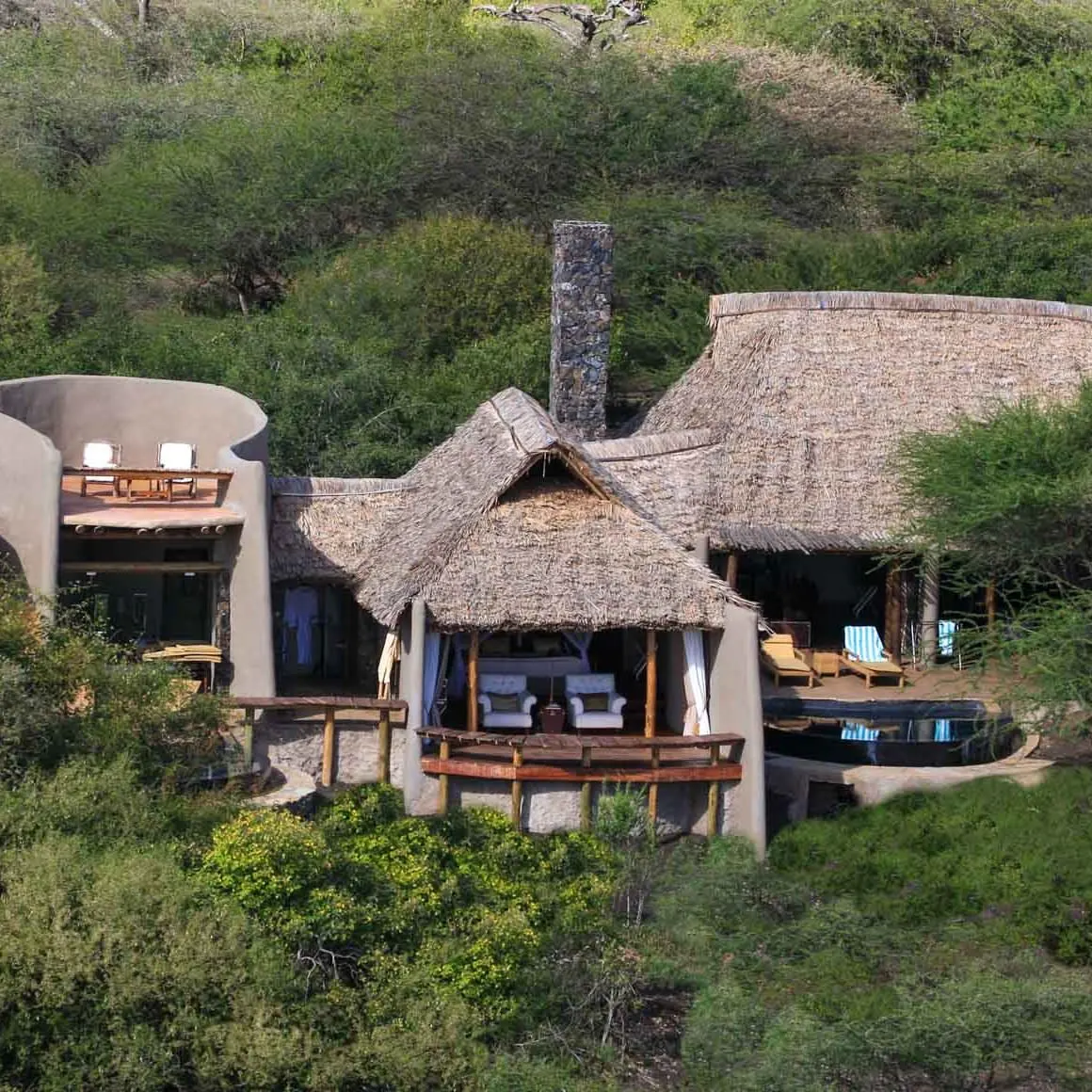
Accommodation Type: Primarily high-end, all-inclusive safari lodges and luxury tented camps. Examples include ol Donyo Lodge on the Mbirikani Group Ranch.
KWS Self-Catering & Camping: KWS operates the Kiboko Guesthouse and several public campsites within the park for adventurous or budget-conscious visitors. These offer a rustic, back-to-basics experience. Visitors must be fully self-sufficient with their own vehicle, food, water, and camping equipment.
2. Outside the Park Gates (Nearby Towns)
Staying in towns like Kibwezi or Mtito Andei provides a practical base for day trips into the park and is generally more budget-friendly.
Experience: A comfortable base with access to local amenities. Suitable for travellers on a tighter budget or those combining a Chyulu visit with a journey along the Mombasa highway.
Accommodation Type: A mix of mid-range hotels, local guesthouses, and lodges. These offer comfortable lodging but do not provide the exclusive wilderness feel of the in-park options.
Advantages and Disadvantages:
Advantages: More affordable, flexible dining options, and easier road access.
Disadvantages: Requires a daily drive to and from the park gate (with associated park fees for each 24-hour period). It is less atmospheric, and visitors miss early morning and late evening experiences in the bush.
For optimal safari weather in Chyulu Hills National Park, the long dry season from June to October offers the best conditions, characterized by cooler temperatures, minimal rainfall, and exceptional atmospheric clarity for breathtaking views of Mount Kilimanjaro.