Malindi Marine National Park is a National Park in Malindi, Kilifi County, Kenya. It is renowned for its vibrant coral gardens, diverse marine life within the Barracuda and North Reefs, and extensive seagrass beds that shelter green sea turtles.
Overview
Name
Malindi Marine National Park
Type
Beach
Town
Malindi
County
Kilifi
Country
Kenya
Key Facts About Malindi Marine Park
Attribute Category
Specific Detail
Location Coordinates
Approximately 3°15′S 40°09′E
Governance/Management
Kenya Wildlife Service (KWS)
Total Area
6 km² (Park) within a 213 km² National Reserve
Entry Fees
From USD 15 per adult non-resident (Check the official KWS website for current citizen/resident rates).
Primary Attraction
Vibrant coral gardens (e.g., Barracuda Reef), snorkelling, glass-bottom boat tours, and diverse marine life including dolphins and sea turtles.
Best Time to Visit
January to March and June to October, during the dry seasons for optimal water clarity.
The Rich Marine Biodiversity and Ecosystem
As the first established Marine Protected Area (MPA) in Africa, gazetted in 1968, Malindi Marine National Park functions as a key biological repository within the Western Indian Ocean belt.
The park extends over 6 square kilometres, enclosed by a larger marine reserve. This creates a buffer zone that helps regenerate fish stocks. The ecosystem is defined by three distinct habitat zones: the fringing reef, the seagrass beds within the lagoon, and the intertidal mudflats connected to the nearby Mida Creek system.
Unlike the deeper pelagic zones found further south in Watamu, Malindi’s ecosystem is heavily influenced by the sediment discharge from the Sabaki River to the north. Although this occasionally affects visibility, the nutrient influx supports a dense biomass of primary producers.
The seagrass meadows, dominated by Thalassodendron ciliatum and Cymodocea serrulata, serve as important nurseries for juvenile ichthyofauna and carbon sinks. This distinguishes the park from areas focused solely on coral.
Coral Reefs and Underwater Landscapes
The benthic architecture of Malindi is characterised by patch reefs and a fringing reef that breaks the energy of the Indian Ocean swells.
The North Reef is the primary area for biological surveys and recreational observation. Structural complexity here comes from hard coral genera adapted to fluctuating turbidity levels.
Dominant Coral Structures:
Porites (Finger Coral): These massive, boulder-like colonies form the foundation of the reef, offering shelter for invertebrates.
Acropora (Staghorn Coral): Found in the shallower, high-light zones, these branching corals create three-dimensional habitats for damselfish.
Tubipora musica (Organ-pipe Coral): A unique octocoral with a red skeleton, prevalent in the protected lagoon areas.
Galaxea fascicularis (Galaxy Coral): Aggressive hard corals often found competing for space on the reef slope.
Diverse Fish Species and Marine Life at Malindi Marine
The park's protected status has allowed populations of slow-growing species to recover, offering a higher biomass density than non-protected areas along the Kenyan coast. The faunal composition within the park includes over 300 species of reef fish.
Invertebrates and Molluscs
The sandy substrates between coral heads host Tridacna squamosa (Fluted Giant Clams) and various echinoderms such as the Protoreaster linckii (Red-knobbed Starfish). The reef crevices are inhabited by Octopus cyanea and Panulirus versicolor (Painted Spiny Lobster).
Key Vertebrate Species
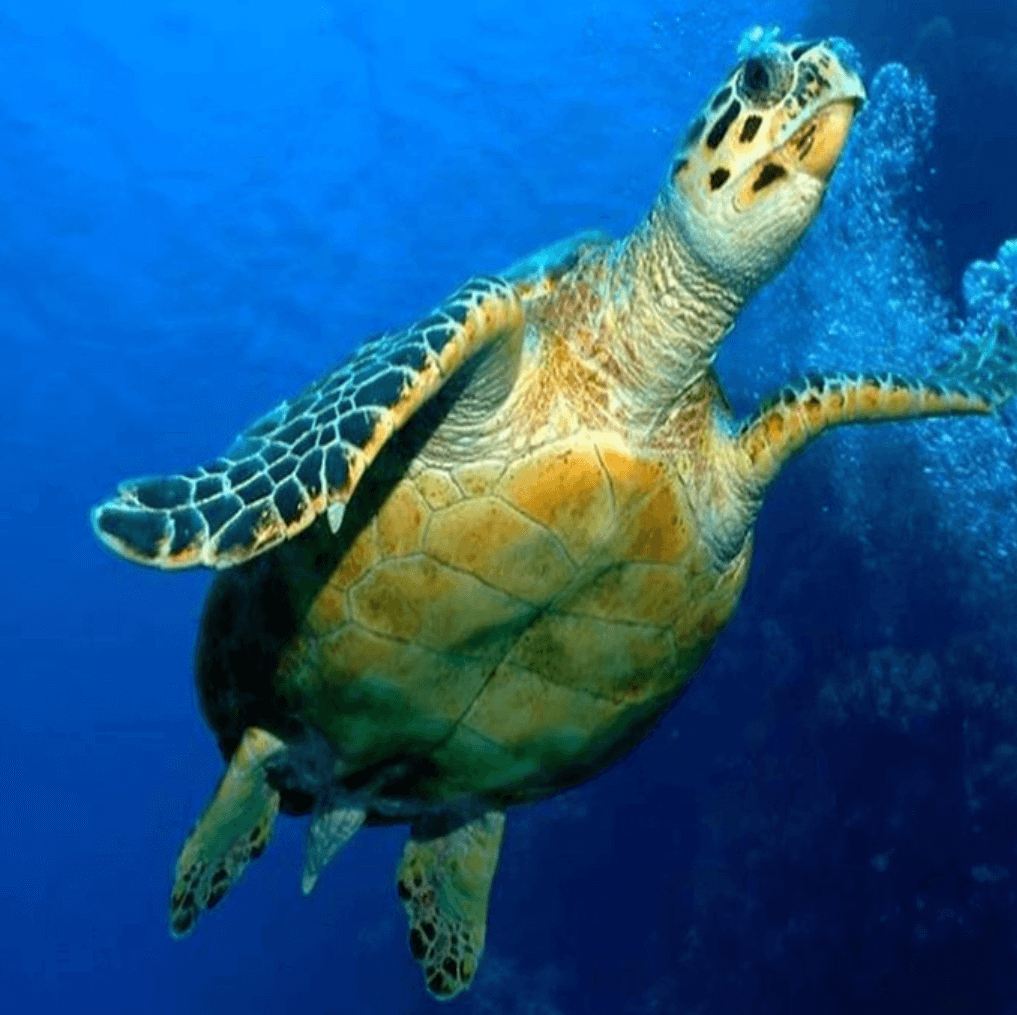
Sea Turtles: The seagrass beds are active foraging grounds for Chelonia mydas (Green Turtle) and the critically endangered Eretmochelys imbricata (Hawksbill Turtle).
Reef Dwellers: Common sightings include the Zanclus cornutus (Moorish Idol), Pomacanthus imperator (Emperor Angelfish), and shoals of Lutjanus kasmira (Blue-striped Snapper).
Predators: Large pelagics are rare inside the lagoon. Carcharhinus melanopterus (Blacktip Reef Shark) and Sphyraena barracuda (Great Barracuda) patrol the reef channels.
Snorkelling and Diving Experiences at the Park
The underwater experience in Malindi is dictated by the tidal coefficients and the monsoon winds (Kaskazi and Kusi).
The lagoon offers a shallow draft, rarely exceeding 8 to 10 metres. This makes it technically accessible for novice divers and snorkelers. Advanced divers seeking wall dives or deep pelagic encounters typically move to the outer edges of the fringing reef or nearby Watamu banks.
Site Specifications:
Coral Gardens: Located inside the lagoon; depth ranges from 2 to 6 metres. These are ideal for macro photography and observing symbiotic relationships like the Clownfish and Heteractis magnifica anemone.
Tewa (Grouper) Caves: Small overhangs inhabited by Giant Groupers (Epinephelus lanceolatus).
Gap Analysis: Malindi requires careful timing regarding the Sabaki River outflow, unlike the clear waters of Kisite-Mpunguti. Divers must consult tide charts; high tide provides optimal saline influx and visibility.
Boat Tours and Water Activities
Motorised activity within the park is strictly regulated by the Kenya Wildlife Service (KWS) to minimise hull damage to shallow coral heads. Glass-bottom boats are the primary mode of transit, specifically designed with shallow drafts to navigate the lagoon at low tide.
The "Magic Island" Phenomenon:
A distinctive geological feature of the Malindi experience is the emergence of temporary sandbars (often referred to as Mayungu or Magic Island) during extreme low tides.
These calcified sand deposits allow visitors to disembark in the middle of the ocean, walking on sediment composed of eroded coral and mollusc shells. This provides immediate access to intertidal creatures without the need for swimming gear. This feature is absent in deeper marine parks like Mombasa Marine Park.
Malindi Marine Park Entry Fees and Costs
Understanding the costs involved is the first step in planning your visit. Park entry fees are managed by the Kenya Wildlife Service (KWS) and are important for the conservation efforts that protect this unique marine ecosystem.
Fees are charged on a 24-hour basis and vary based on your residency status.
Note that KWS operates a cashless payment system at its park gates. You can pay using M-Pesa (a mobile money service), Visa, or MasterCard.
KWS Park Entry Fees (24-Hour Pass)
The pricing structure is categorised as follows:
Category
Adult
Child/Student
Non-Residents
USD 17
USD 13
East African Residents
KES 300
KES 215
Kenya Citizens
KES 300
KES 215
Note: Prices are subject to change. Always verify the latest fees on the official KWS website before your trip. Residents will need to present a valid National ID or residency permit.
Additional Costs to Consider
Boat Hire: You will need to hire a boat with a licensed guide to visit the coral gardens. Prices are negotiable at the park entrance jetty but typically range from KES 2,500 to KES 4,000 for a trip.
Snorkelling Gear: While many boat operators include gear, you can also hire masks, snorkels, and fins at the park entrance for a small fee.
Marine Guide: Your boat fee almost always includes the services of a local guide who is knowledgeable about the best snorkelling spots and marine life.
Getting to Malindi Marine National Park
Malindi is a well-connected coastal town, accessible from Nairobi and other major hubs through several transport options. Your choice will depend on your budget, timeframe, and travel style.
From Nairobi by Air (Fastest Route)
Flying is the most efficient way to reach Malindi from the capital.
Airports: Flights depart from Nairobi's Jomo Kenyatta International Airport (NBO) or the smaller, more central Wilson Airport (WIL). They arrive at Malindi Airport (MYD).
Airlines: Several carriers service this popular route, including Kenya Airways, its subsidiary Jambojet, and other local airlines like Safarilink.
Flight Time: The journey is approximately 1 hour.
Final Leg: From Malindi Airport, the Marine Park entrance is a short 10-15 minute taxi or tuk-tuk ride away.
From Nairobi by Road (Scenic and Budget-Friendly)
Travelling by road offers a chance to see more of the Kenyan landscape but requires significantly more time.
By Car: The drive covers approximately 600 kilometres and takes 10-12 hours, depending on traffic and stops. The main route follows the A109 Highway (Nairobi-Mombasa Road) before branching off towards Malindi.
By Coach: Several reputable long-distance bus companies (e.g., Mash Poa, Modern Coast) operate daily services from Nairobi to Malindi. This is the most economical option, with both daytime and overnight coaches available.
By Train and Connector: A popular and comfortable alternative is to take the SGR (Standard Gauge Railway) train from Nairobi to Mombasa (Miritini Station). The express service takes around 5-6 hours. From Miritini Station, you can hire a private taxi or take a connecting coach to Malindi, which is an additional 2-3 hour journey (approx. 120 km).
Where to Stay When Visiting Malindi Kenya
Malindi offers a wide range of accommodation to suit every preference and budget, with options located around the marine park. The key decision is whether you prefer the convenience of a beachfront resort or the local atmosphere of the town centre.
Beachfront Resorts and Hotels
This is the most popular option for visitors prioritising easy access to the ocean. These properties line the coast just outside the park's boundaries.
Best For: Tourists, families, and couples seeking convenience and resort amenities.
Logic: Staying here means you are just steps away from the beach where you can hire a boat to take you directly into the marine park. It provides a convenient holiday experience with facilities like swimming pools, restaurants, and organised water sports.
Range: From all-inclusive luxury resorts to charming mid-range boutique hotels.
Private Villas and Holiday Homes
For groups, families, or those seeking a more exclusive and private experience, renting a villa is an excellent choice.
Best For: Larger groups, long-stay visitors, and travellers desiring privacy and self-catering options.
Logic: These properties often come with private pools, gardens, and dedicated staff. They are typically located in secure residential areas along the Malindi coast, offering a home-away-from-home feel while still being close to the park.
Guesthouses and Apartments in Malindi Town
Staying in the vibrant centre of Malindi town provides a more affordable and culturally immersive experience.
Best For: Budget-conscious travellers, backpackers, and those wanting to experience local life.
Logic: Accommodation here is significantly cheaper. You can enjoy local restaurants, markets, and nightlife. The marine park jetty is only a 5-10 minute ride away by boda-boda (motorcycle taxi) or tuk-tuk, making it a very practical base for exploration.
For optimal beach and marine activities at Malindi Marine National Park, the best times to visit are during the dry seasons: January to March and July to September. These periods offer excellent water clarity, calmer seas ideal for snorkeling, diving, and boat tours, alongside abundant sunshine.