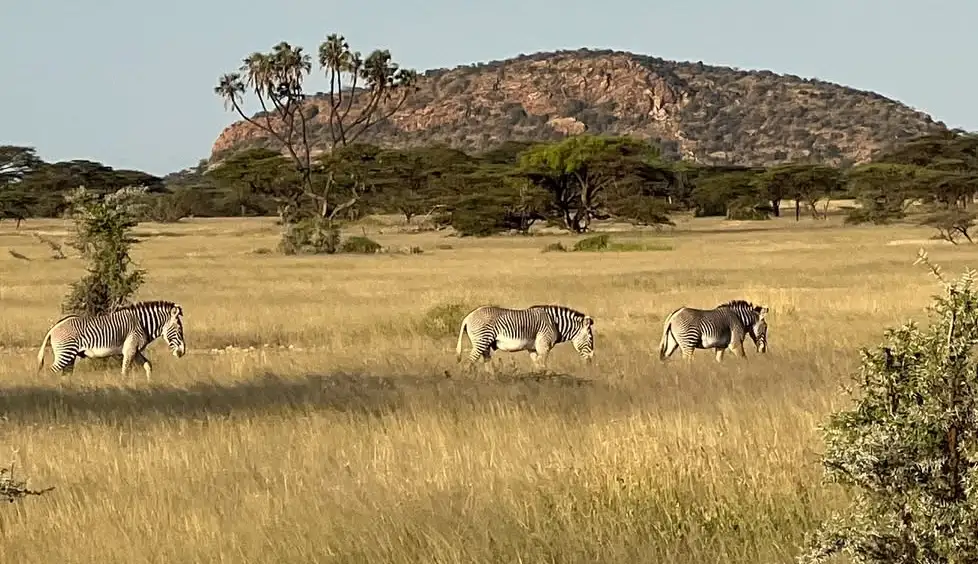
Shaba National Reserve is a National Reserve in Isiolo, Isiolo County, Kenya. The reserve is renowned for its dramatic volcanic landscapes, the life-giving Ewaso Nyiro River, and its resident populations of special-five wildlife, including the Grevy's zebra, reticulated giraffe, and the Somali ostrich.
Overview
Name
Shaba National Reserve
Type
National Park
Town
Isiolo
County
Isiolo
Country
Kenya
Key Facts about Shaba National Reserve
Attribute Category
Specific Detail
Location Coordinates
Approximately 0.6500° N, 37.8333° E
Governance/Management
Kenya Wildlife Service (KWS) in conjunction with the Isiolo County Government.
Total Area
239 square kilometres (92 square miles)
Entry Fees (Adult)
Non-Resident: USD 52; East African Resident: KES 1,030; Kenyan Citizen: KES 500 (Rates subject to change).
Primary Attraction
Arid-adapted wildlife (Grevy's zebra, gerenuk, Beisa oryx), the Ewaso Nyiro River, and rugged scenery.
Best Time to Visit
During the dry seasons (June to October and December to February) for optimal wildlife viewing.
Landscape and Unique Features
Unlike the flat plains of the neighbouring Samburu National Reserve, Shaba National Reserve is defined by its rugged, volcanic topography.
The reserve takes its name from Mount Shaba, a volcanic cone rising 1,525 metres above sea level, composed of extinct volcanic rock and hardened lava flows. This geological history creates a darker, rockier terrain compared to the sandy soils of Buffalo Springs.
The Ewaso Ng'iro River forms the northern boundary, providing a key water source in this semi-arid environment. The river often recedes during the dry season.
However, the reserve possesses a distinct hydrological advantage: the Shaba Springs. These natural springs allow riverine forests and marshlands to persist even when the Ewaso Ng'iro runs dry, attracting wildlife when water sources elsewhere fail.
Notable geographical entities include:
Turkana Lava Fields: Extensive black lava rock formations that require sturdy 4x4 suspension.
Riverine Forests: Dense clusters of Doum Palms and Acacia elatior lining the riverbanks.
Alkaline Grasslands: Open areas supporting specifically adapted herbivores.
Wildlife of Shaba National Reserve
Shaba National Reserve lies north of the equator, hosting species not found in Kenya’s southern parks like the Maasai Mara. The primary ecological feature is the presence of the Samburu Special Five. These dry-country adapted species are endemic to this ecosystem and are the core focus of any game drive here.
The Samburu Special Five
Reticulated Giraffe: Distinguished by a liver-coloured, geometric polygonal pattern outlined in bright white, unlike the jagged edges of the Masai Giraffe.
Grevy’s Zebra: Larger than the common Plains Zebra, possessing thinner stripes, a white belly, and large, rounded ears. Shaba is an important refuge for this endangered equid.
Beisa Oryx: A straight-horned antelope adapted to extreme heat, capable of raising its body temperature to conserve water.
Somali Ostrich: Identifiable by the grey-blue neck and legs of the male, distinct from the pink-necked Maasai Ostrich.
Gerenuk (Waller's Gazelle): Known as the "giraffe gazelle," this antelope stands on its hind legs to browse high acacia branches.
Predators and Birdlife
The rocky kopjes provide vantage points for Leopards, which are frequently sighted near the riverine forests.
Lions and Cheetahs patrol the open scrubland, though densities are generally lower than in Samburu due to the rougher terrain. The reserve is also the habitat of the rare, endemic Williams's Lark, making it an important destination for ornithologists. Other avian species include the Vulturine Guineafowl and the Martial Eagle.
Activities and Things to Do at Shaba
Visitor traffic in Shaba is significantly lower than in Samburu or Buffalo Springs. This offers a solitary wilderness experience. Activities focus on low-density tourism and historical exploration.
Game Drives: Navigate the tracks along the Ewaso Ng'iro and the internal loops near the springs. Drivers must be cautious of volcanic rock on secondary tracks.
Joy Adamson’s Monument: Visit the site where the author of Born Free released Penny the Leopard and was later murdered in 1980. A small museum displays artefacts related to her conservation work.
Sundowners at Shaba Hill: Designated points offer views over the lava flows towards the distant Mount Kenya.
Magado Crater Excursion: Located on the periphery, this crater features pools of saline water where local pastoralists mine soda ash (magadi) for livestock supplements.
Conservation Efforts and Challenges
Shaba faces complex ecological pressures. The reserve is a focal point for the Grevy’s Zebra Trust, which monitors populations of the endangered zebra. Conservation in this sector involves direct collaboration with the Nakuprat-Gotu Community Conservancy to manage grazing rights.
Ewaso Lions, a dedicated conservation project, operates within the wider ecosystem to mitigate human-wildlife conflict. The primary challenge remains encroachment by livestock from surrounding pastoralist communities during severe droughts, which can displace wildlife and degrade the fragile volcanic soil.
Local Culture and Communities
While the Samburu people are the most marketed demographic in the region, Shaba is predominantly influenced by the Borana people. The Borana are Oromo-speaking pastoralists who manage camel and cattle herds in the arid lands bordering Isiolo.
Interactions here are less commercialised than the "cultural villages" often found near the Mara. Visitors can witness authentic livestock watering practices at the peripheral springs or the Magado Crater, where donkeys are used to transport soda ash up steep crater walls.
Accommodation Options In and Around Shaba
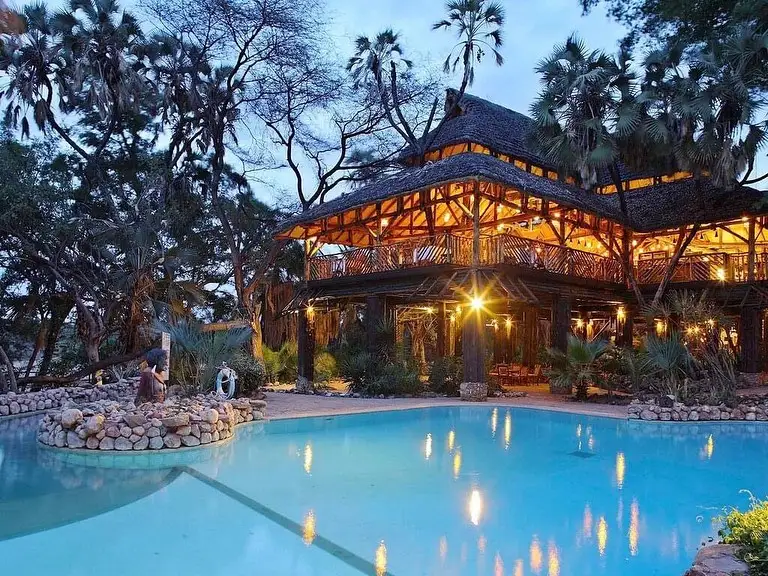
Accommodation within the reserve boundaries is limited. This ensures low visitor density. The primary facility is the Sarova Shaba Game Lodge, located along the Ewaso Ng'iro River. This lodge is built around the natural springs, creating a micro-ecosystem within the hotel grounds that attracts monitor lizards and crocodiles.
Joy’s Camp, built on the site of Joy Adamson’s original tented camp, offers a high-end, boutique experience with a focus on historical context and exclusivity. Camping is permitted at designated public campsites near the river, though facilities are basic and require self-sufficiency.
Photography Tips for Shaba National Reserve
Shaba presents difficult but rewarding conditions for photographers. The black volcanic rock absorbs heat, creating significant heat haze (shimmer) from late morning to early afternoon. This negatively impacts long-lens sharpness.
Contrast Management: The contrast between black lava, red earth, and green Doum palms provides high dynamic range scenes. Use a polarising filter to manage glare from the rocks and river.
Dust Control: The soil is fine and powdery. Two camera bodies are recommended to avoid changing lenses in the field.
Golden Hour Priority: Shoot strictly between 06:30–09:00 and 16:30–18:30. The light hits the Reticulated Giraffe’s coat vividly during these windows.
Backgrounds: Use the darker volcanic hills as backdrops for lighter subjects like the Grevy's Zebra to make the subject pop.
Shaba National Reserve Entry Fees and Park Costs
Planning your budget for a trip to Shaba is straightforward. The reserve's entry fees are managed by the Isiolo County Government and are structured based on your residency status. Fees are charged per person for a 24-hour period, meaning if you enter at 10:00 AM, your ticket is valid until 10:00 AM the following day. You must retain your proof of payment throughout your stay.
All payments at the gate are expected to be cashless, using methods like M-Pesa or credit/debit cards. Always confirm the latest rates with your tour operator or directly with the park authorities before travel, as they can change.
Park Entry Fees (Per 24 Hours)
Category
Non-Resident
East African Resident
Kenyan Citizen
Adult
USD $70
KES 1,000
KES 500
Child (3-17 years)
USD $40
KES 500
KES 200
Student (with valid ID)
USD $40
KES 500
KES 200
Vehicle Entry Fees (Per 24 Hours)
A separate fee is charged for the vehicle entering the reserve. This is a one-time charge per 24-hour period, regardless of the number of occupants.
Vehicle (Less than 6 seats): KES 400
Vehicle (6 to 12 seats): KES 1,000
Vehicle (13 to 24 seats): KES 2,500
Trucks and Lorries: KES 3,000 - 5,000 (depending on tonnage)
Important: Residents and Citizens must present a valid National ID or official Resident Permit to qualify for the respective rates. Without valid identification, non-resident rates will be applied.
Transport and Logistics for Shaba National Reserve
Located approximately 340 kilometres north of Nairobi, Shaba is accessible by both road and air. Your choice will depend on your budget, timeline, and desired travel experience.
By Road from Nairobi
The journey by road is a scenic drive that offers a glimpse into Kenya's diverse landscapes. It takes approximately 5 to 6 hours depending on traffic and road conditions. A 4x4 vehicle is strongly recommended due to the condition of the final stretches of road and for navigating the tracks within the reserve.
The Route: The primary route is via the A2 Highway. You will drive north from Nairobi, passing through major towns like Thika, Karatina, Nanyuki, and Timau before reaching Isiolo.
Final Stretch: From Isiolo town, you will continue north for a short distance before taking a right turn towards Archer's Post. The signposted entrance to Shaba National Reserve is located just off this road.
By Air (Flying to Shaba)
Flying is the quickest and most comfortable way to reach the reserve. The main hub for the region is the Buffalo Springs Airstrip, which serves Shaba, Samburu, and Buffalo Springs reserves.
Airlines and Departure: Scheduled daily flights are operated by reputable local airlines such as Safarilink and AirKenya Express. These flights depart from Wilson Airport (WIL) in Nairobi, a smaller airport dedicated to domestic and safari routes.
Flight Time: The flight itself takes approximately 60 to 90 minutes.
Transfers: Upon arrival at the airstrip, your pre-booked lodge or tour operator will meet you with a safari vehicle for the final transfer to your accommodation within Shaba. This often doubles as your first game drive.
Accommodation for Your Shaba Safari
Your choice of accommodation significantly shapes your safari experience. You must decide whether to stay inside the reserve for maximum immersion or just outside the gates. Both options offer different perspectives and price points.
Inside Shaba National Reserve
Staying within the park boundaries offers a close connection to the wilderness. You benefit from immediate access to game drives at dawn and dusk without any travel time to the gate. This option is defined by exclusivity and atmosphere.
Sarova Shaba Game Lodge: This is the most famous and established lodge within Shaba. Built around natural spring-fed pools and cascading waterfalls, it offers a true oasis in the arid landscape. Known for its historical connection to Joy Adamson and the film "Born Free," it provides a luxury experience with excellent facilities, including a swimming pool, fine dining, and guided game drives. It is ideal for families, couples, and those seeking comfort and a touch of history.
Outside the Reserve (Nearby Options)
Staying outside the official boundaries of Shaba provides more variety, often in the neighbouring Samburu or Buffalo Springs National Reserves, or in private conservancies. These locations are just a short drive from the Shaba gate and allow you to explore the entire ecosystem.
Luxury Tented Camps (in Samburu/Buffalo Springs): For an authentic "under canvas" experience, camps like Elephant Bedroom Camp (Samburu) or Ashnil Samburu Camp offer luxury tents along the Ewaso Nyi'ro River. They provide easy access to all three reserves, allowing for a full safari circuit.
Mid-Range and Eco-Lodges: Options like Samburu Sopa Lodge or Samburu Intrepids Tented Camp provide a balance of comfort and value. They are excellent choices for families and first-time safari-goers, offering full-board packages and organised activities.
Budget Guesthouses (in Isiolo): For the most budget-conscious traveller, basic guesthouses and small hotels are available in Isiolo town. This option is economical, but it requires a significant daily commute to and from the reserve. This can impact your game viewing time.
For optimal safari conditions in Shaba National Reserve, the dry seasons from January to February and especially June to September are generally recommended. These periods offer consistently hot, sunny weather with minimal rainfall, leading to sparser vegetation and concentrating wildlife around the Ewaso Ng'iro River, making sightings easier.