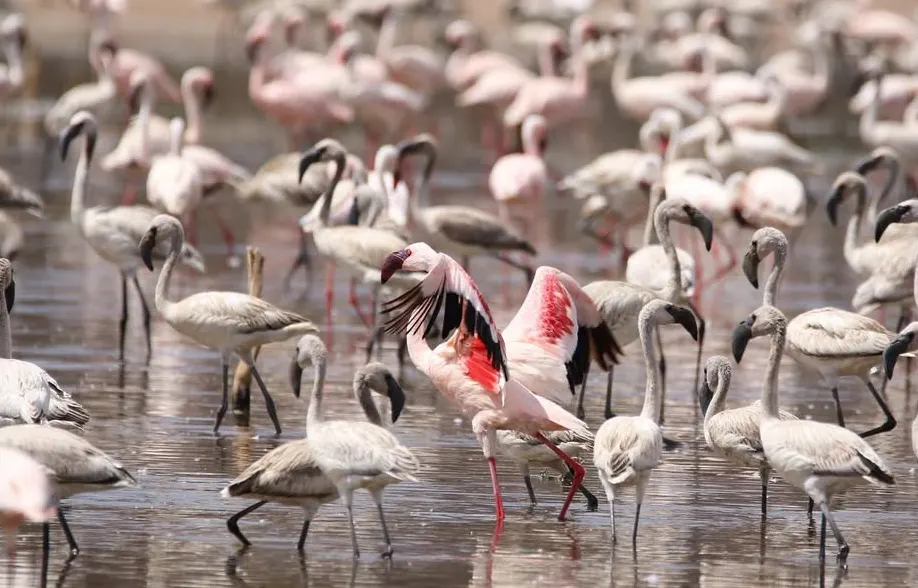
Lake Bogoria National Reserve, situated in Kenya's Great Rift Valley within Baringo County, is known for its large population of lesser flamingos. Active hot springs and geysers erupt along its shoreline.
Overview
Name
Lake Bogoria National Reserve
Type
Lake
Town
Marigat
County
Baringo
Country
Kenya
Key Facts About Lake Bogoria National Reserve
Attribute Category
Specific Detail
Location Coordinates
0°15′18″N 36°05′06″E
Governance/Management
Kenya Wildlife Service (KWS) & Baringo County Government
Total Area
107 square kilometres (41 sq mi)
Entry Fees (Adult)
Non-Resident: US$50; East African Resident: KES 1,000; Kenyan Citizen: KES 500 (Subject to change)
Primary Attraction
Lesser flamingos, hot springs, and geysers
Best Time to Visit
June to October and January to February (Dry seasons)
Unique Alkaline Waters and Geothermal Activity
Lake Bogoria stands apart from other Rift Valley lakes due to its intense geothermal activity. Bogoria sits atop a fractured volcanic belt, giving it Africa's highest concentration of true geysers.
Lake Nakuru and Lake Elementaita are also known for their alkalinity, but Bogoria's geothermal activity is more intense. Bogoria's sodic chemistry, with a pH often exceeding 10.5, creates the specific environment needed for Spirulina platensis (blue-green algae) to grow.
The Loburu Hot Springs, the primary geothermal site, are on the western shore. They feature eruptive geysers and bubbling mud pots. These springs discharge superheated water with dissolved minerals, adding to the lake's unique chemical composition.
Here, geysers project water columns significantly above ground level, unlike the passive steam vents in Hell's Gate National Park.
Loburu Geysers are eruptive vents shooting boiling water 2.5 to 5 metres into the air.
Chepkoiyo Springs are a secondary group of hot springs located further south along the lakeshore.
The chemical composition includes high concentrations of sodium carbonate, sodium bicarbonate, and silica.
The tectonic setting places the lake between the Ngatiol and Siracho escarpments, illustrating active continental rifting.
Flamingo Population and Birdwatching
The lake supports one of the world's largest populations of Lesser Flamingos (Phoeniconaias minor). During peak seasons, estimates suggest numbers exceeding 1.5 million individuals congregate here to feed on the abundant cyanobacteria.
This aggregation often occurs when water levels in Lake Nakuru rise, diluting its alkalinity and moving the flocks north to Bogoria.
Birdwatchers must distinguish between the two primary species found here. The Lesser Flamingo accounts for the vast majority of the population and is identified by its deep red bill and smaller stature.
The Greater Flamingo (Phoenicopterus roseus), present in smaller numbers, is taller with a pink bill tipped in black and feeds on brine shrimp rather than algae.
The primary food source is Spirulina (cyanobacteria). This thrives in the saline, alkaline water.
Water pH levels and algae density drive migration between Rift Valley lakes.
Fish Eagles and Marabou Storks prey on weaker birds along the shoreline.
Beyond flamingos, the lake hosts Black-necked Grebes and African Spoonbills.
Wildlife Diversity Beyond Flamingos
The reserve provides an important sanctuary for the Greater Kudu (Tragelaphus strepsiceros), even though the avian population often overshadows it. Lake Bogoria National Reserve maintains one of Kenya's healthiest Greater Kudu populations.
It offers more consistent sightings than Tsavo or Meru National Parks. The steep slopes of the Siracho Escarpment provide the ideal rocky, bush-covered terrain these browsers need.
The reserve lacks heavy predators such as lions, which changes herbivore behaviour, making them slightly less skittish. Leopards (Panthera pardus) patrol the rocky outcrops, and Spotted Hyenas are active nocturnally.
The absence of elephants allows for denser acacia growth, supporting smaller browsers.
Patas Monkeys (Erythrocebus patas) and Olive Baboons are primate species that frequent the campsites.
Small antelopes such as Kirk’s Dik-dik and Klipspringers inhabit the rocky terrain near the hot springs.
Monitor Lizards are reptile species frequently observed near the geothermal vents, where they regulate their body temperature.
Prosopis juliflora (Mathenge) is an invasive species. It poses a threat to indigenous vegetation and Kudu habitats.
Activities and Things to Do at L. Bogoria
The visitor experience at Lake Bogoria is unlike the standard vehicle-bound safari found in the Maasai Mara. Visitors can exit vehicles at designated points, particularly around the hot springs, for a hands-on experience with the geothermal features.
A distinct activity involves boiling raw eggs in the Loburu Hot Springs, which demonstrates the geysers' extreme temperature.
Walking safaris are permitted in specific zones. Visitors can track the Greater Kudu on foot during these safaris. Cycling is also an option along the main tarmac road that parallels the lake. This provides a silent approach to wildlife that vehicles cannot replicate.
Boiling maize or eggs in the natural hot springs (water temperature approximately 94°C) serves as a geothermal demonstration.
Walking safaris include guided treks along the lakeshore and lower escarpment trails.
Cultural visits involve interactions with the Endorois community, the indigenous custodians of the land. These focus on their pastoralist heritage.
Boat tours operate only during high water levels. They are strictly regulated to prevent disturbance to feeding flamingos.
Lake Bogoria Photography Advice
Photographers encounter challenges and opportunities at Lake Bogoria due to harsh equatorial light reflecting off the soda lake.
Steam rising from the geysers creates atmospheric layering not found at other birding sites. Compression is key for capturing the density of flamingo flocks. A telephoto lens (400mm+) helps isolate individual birds against the mass of pink.
The Siracho Escarpment casts a shadow over the lake in the late afternoon. Morning light (06:30 – 09:00) is best for illuminating the birds and the steam simultaneously.
The contrast between pink flamingos, blue water, and dark green escarpment vegetation offers a high dynamic range scene.
Use the steam from hot springs as a foreground element to frame the flamingos.
High shutter speeds (1/2000s) are required to freeze the movement of birds in flight.
Underexpose slightly (-0.3 to -0.7 EV) to prevent "blowing out" highlights on the white plumage of Greater Flamingos.
Low-angle shots from the shoreline emphasise the scale of the flock.
Lake Bogoria National Reserve Entry Fees and Costs
Entry fees for Lake Bogoria are clear. The Baringo County Government manages pricing, structured in tiers based on visitor status. It is important to carry identification (National ID for citizens, resident permit/alien card for residents, or passport for non-residents) to ensure correct charges.
Park Entry Pricing Logic
Fees are typically valid for a 24-hour period from the time of entry. The structure is categorised as follows:
Non-Resident Adults/Children represents the highest tier, charged in USD. It applies to all international visitors without Kenyan residency status.
East African Resident Adults/Children receive a reduced rate. This applies to residents of Kenya, Uganda, Tanzania, Rwanda, Burundi, and South Sudan. Proof of residency is required, and rates are usually quoted in KES.
Kenyan Citizen Adults/Children fall into the most affordable tier. This applies to Kenyan citizens with valid identification, with rates in KES.
Vehicle and Activity Fees
In addition to personal entry fees, a separate fee is charged for vehicles entering the reserve. This fee depends on the vehicle's size (e.g., under 6 seats, 6-12 seats, over 12 seats). Special activities, such as using a designated campsite, will also incur separate charges.
Important Note: Park fees are subject to change. For current and accurate rates, visitors should check the official Baringo County Government tourism website or contact reserve management directly before their visit.
Lake Bogoria Transport and Logistics
Lake Bogoria is located in Kenya's Great Rift Valley, approximately 240 kilometres north-west of Nairobi. It is accessible by both road and air; road travel is the most common method for visitors.
Getting There by Road from Nairobi
The journey by private car is scenic and offers a good introduction to the Rift Valley landscape. Plan for a 4 to 5-hour drive, depending on traffic conditions when leaving Nairobi.
The primary route follows the A104 highway from Nairobi towards Nakuru. Just before Nakuru town, take the turn-off for the B4 road heading north towards Marigat. From Marigat town, a well-signposted turn will lead onto the C55 road, which takes you directly to the main gate of the Lake Bogoria National Reserve (Loboi Gate).
A 4x4 vehicle is not strictly necessary for the main roads, but it is highly recommended. It provides better clearance and handling, especially on the dirt tracks within the reserve or if you plan to explore surrounding areas.
Budget travellers can use public service vehicles (matatus). Typically, take a shuttle or bus from Nairobi to Nakuru, then another matatu from Nakuru to Marigat. From Marigat, hiring a local taxi or a motorbike taxi (boda-boda) may be necessary for the final leg to the reserve gate.
Getting There by Air
There is no direct commercial airport at Lake Bogoria. Visitors can fly to a nearby airstrip and arrange for a road transfer.
The closest functional airstrip is at Lake Baringo.
Charter flights can be arranged from Wilson Airport in Nairobi directly to the Lake Baringo airstrip. Scheduled airlines like Safarilink also operate flights to various Rift Valley destinations. Check their schedule for the most convenient landing point. From there, arrange a vehicle transfer to your lodge (approximately a 1-hour drive from Lake Baringo).
Lake Bogoria Accommodation Options
Choosing accommodation forms an important part of trip planning. The main decision concerns staying at the reserve's edge for convenience or further afield for more options, often near neighbouring Lake Baringo.
Inside the Reserve and at the Gate
Staying within or at the immediate entrance to the reserve offers good access. This allows for early morning access to the geysers and late departure in the evening.
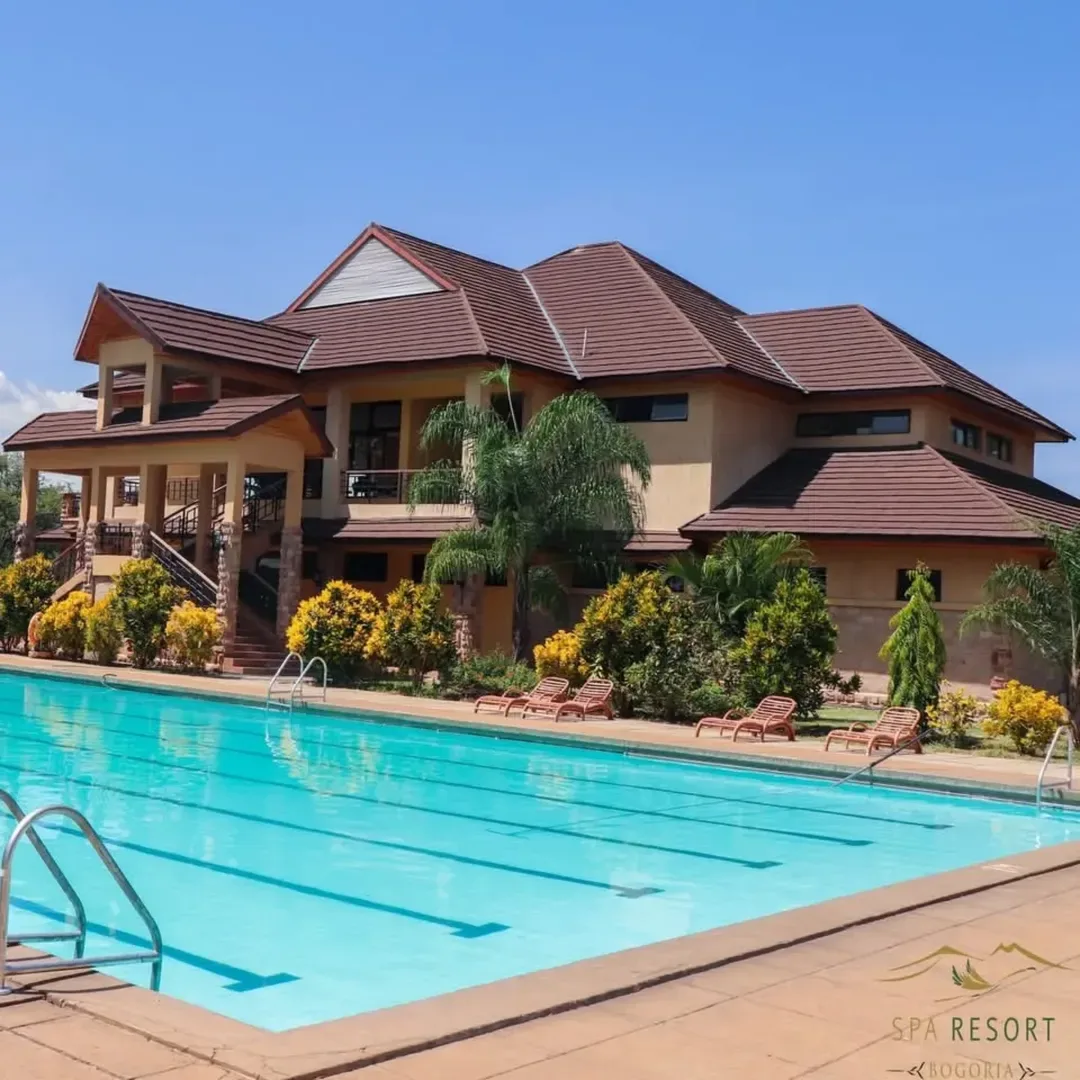
The Lake Bogoria Spa Resort is the main hotel option. It is located just outside the main Loboi Gate. The resort is known for its naturally heated spa pool and offers comfortable rooms, a restaurant, and other amenities, making it a convenient and popular choice.
Several designated campsites operate inside the reserve, managed by the county government, for a more immersive and budget-friendly experience. The Acacia and Fig Tree Campsites are popular choices. These are basic "do-it-yourself" sites, so visitors must bring all their own camping gear, food, and water.
Outside the Reserve (Near Lake Baringo and Marigat)
Staying about 30-60 minutes away provides more diverse accommodation choices. This allows easier exploration of both Lake Bogoria and Lake Baringo on the same trip.
The area around Lake Baringo has a greater concentration of mid-range to luxury lodges and tented camps. Options range from the well-established Soi Safari Lodge to more intimate camps. These properties often offer activities such as boat trips on Lake Baringo and cultural visits, in addition to excursions to Lake Bogoria.
The nearby town of Marigat offers several simple, clean, and affordable guesthouses. This provides a good option for budget travellers with their own transport to access the reserve.
For optimal travel to Lake Bogoria National Reserve, the dry seasons of January to February and June to September offer the most favorable weather conditions. During these periods, expect consistently high temperatures, often exceeding 30°C, low humidity, and predominantly clear skies, ideal for game drives, walking excursions, and photography.