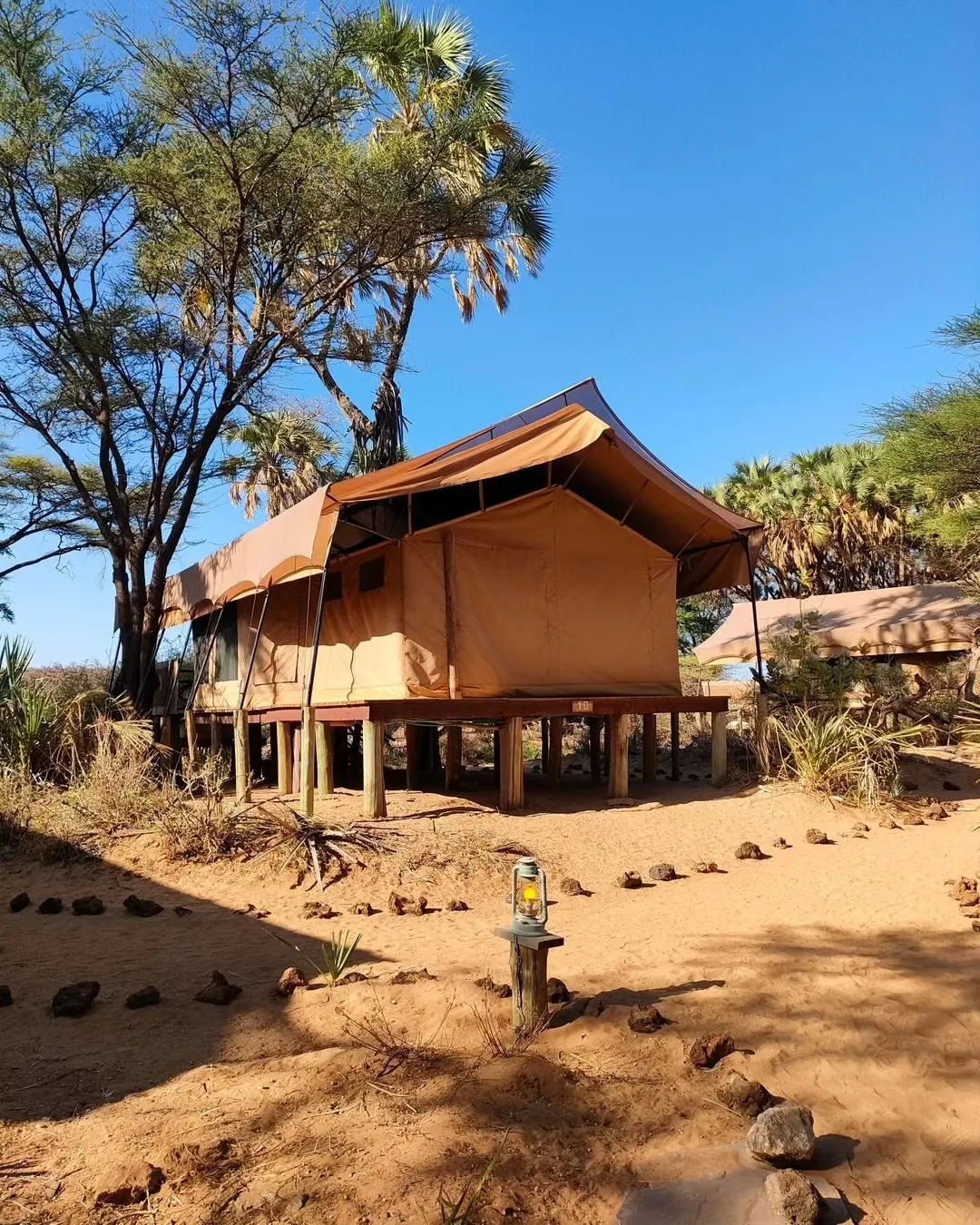
Kenya's northern frontier district is a vast, semi-arid expanse defined by rugged terrain and the critical arteries of its life-giving rivers. It is the perennial Ewaso Ng'iro River, in particular, that sustains the significant biodiversity found within the Samburu National Reserve. A premier game reserve situated in Samburu County, Kenya, this protected area forms a vital part of the greater Ewaso ecosystem.
Overview
Name
Samburu National Reserve
Type
National Park
Town
Archers Post
County
Samburu
Country
Kenya
Samburu National Reserve Facts
Attribute Category
Specific Detail
Location Coordinates
Approximately 0.6333° N, 37.5333° E
Governance/Management
Samburu County Government
Total Area
165 square kilometres (64 square miles)
Entry Fees
Tiered pricing for Citizens, Residents, and Non-Residents. Verify current rates with the official county authority.
Primary Attraction
The "Samburu Special Five": Grevy's zebra, reticulated giraffe, Beisa oryx, Somali ostrich, and the gerenuk.
Best Visiting Window
The dry seasons: June to October and December to March.
Wildlife at the Samburu National Reserve and the Special Five
Unlike the Masai Mara, where species distribution is driven by the Great Migration, Samburu National Reserve functions on a distinct ecological baseline defined by the Ewaso Ng'iro ecosystem. The primary biological feature is the Samburu Special Five. These species are endemic to the arid Northern Frontier District and are rarely found south of the equator.
Visitors observing wildlife here encounter physiological adaptations to dry conditions, distinct from the savannah sub-species found in southern Kenya.
Reticulated Giraffe (Giraffa camelopardalis reticulata): Distinguished by liver-coloured polygonal patches outlined in bright white, contrasting with the jagged edges of the Masai Giraffe.
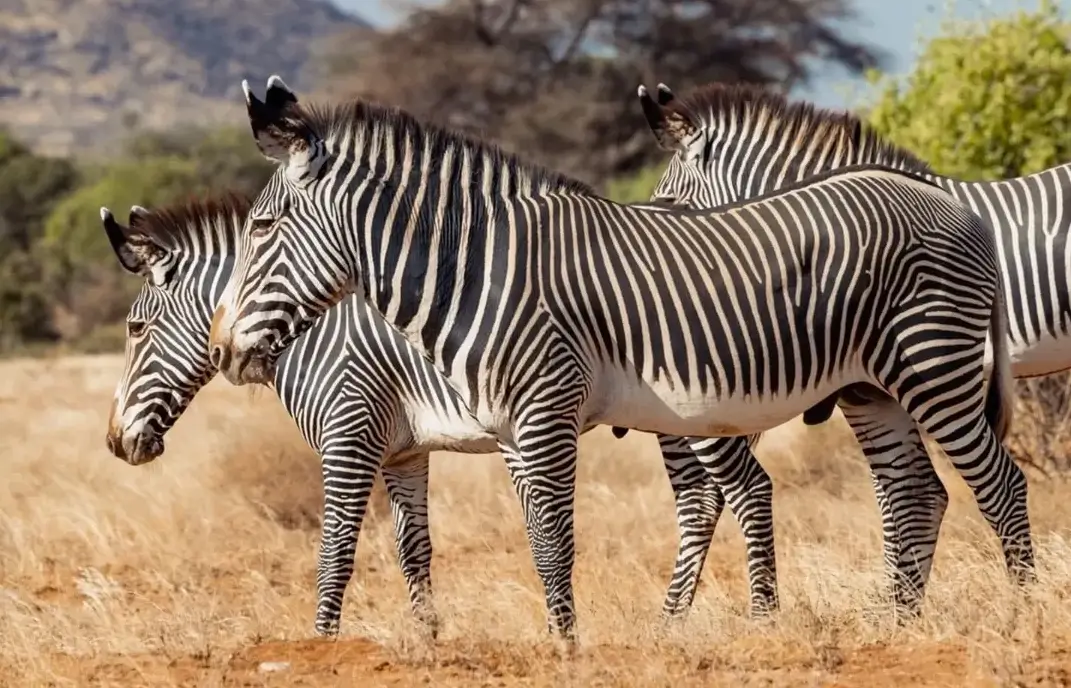
Grevy’s Zebra (Equus grevyi): The largest wild equid, characterised by narrow, vertical stripes, a mule-like appearance, and large, rounded ears. This species is endangered and primarily concentrated in this region.
Beisa Oryx: Recognisable by straight, rapier-like horns and distinct black markings on the face and legs. They are physiologically adapted to conserve water by raising their body temperature.
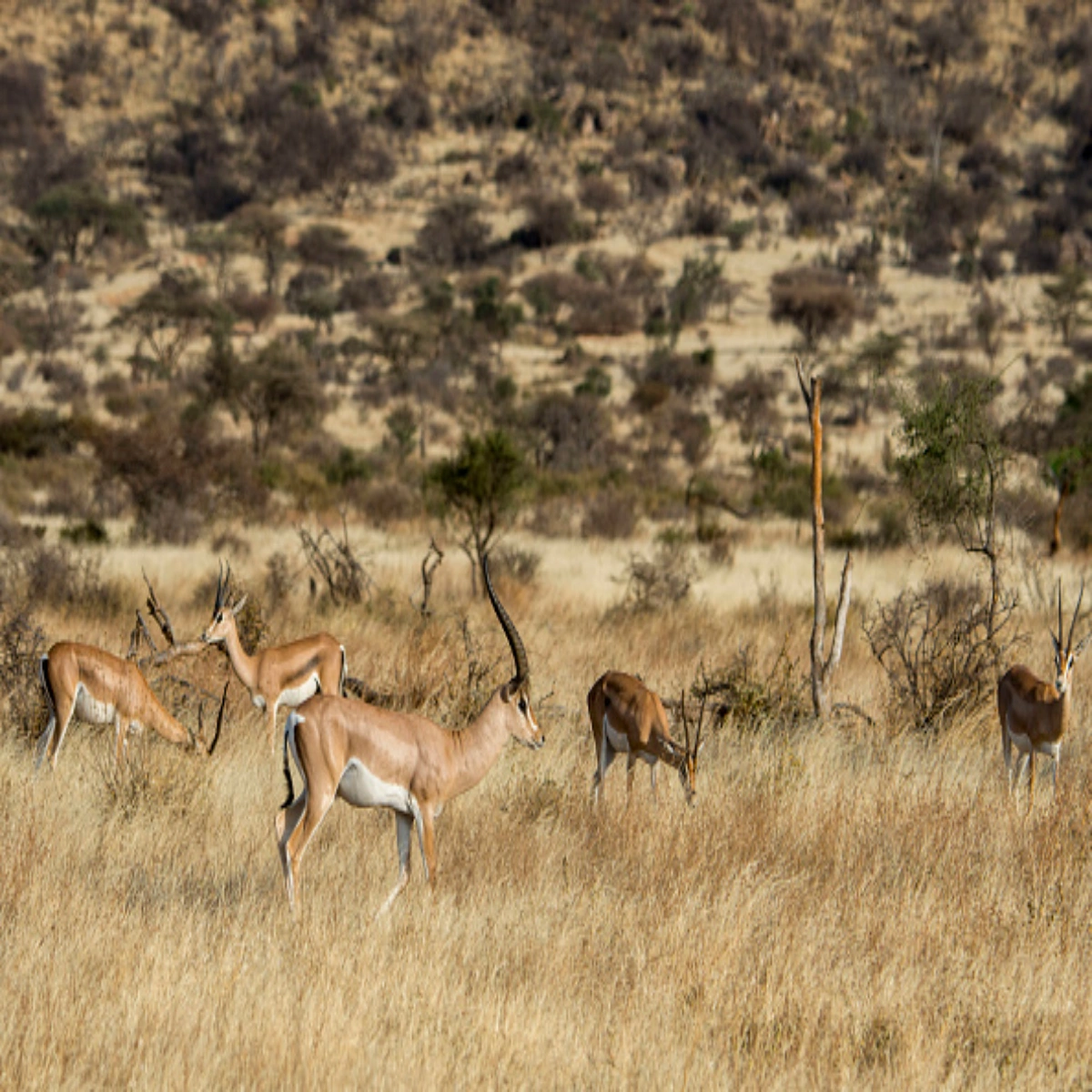
Gerenuk (Litocranius walleri): Often termed the "giraffe gazelle," this antelope possesses a modified hip structure allowing it to stand erect on hind legs to browse Acacia tortilis foliage inaccessible to other grazers.
Somali Ostrich: Distinct from the pink-necked Masai Ostrich, males of this sub-species display blue-grey necks and legs during the mating season.
Predator Density and Behaviour
While the Serengeti-Mara ecosystem relies on sheer biomass, Samburu offers higher visibility for predators due to thinner vegetation cover. The reserve supports a significant population of Leopards, which utilise the riparian canopy of the Ewaso Ng'iro for caching kills. Furthermore, the region is a critical habitat for the African Wild Dog (Lycaon pictus), a species largely absent from high-traffic parks due to their susceptibility to diseases carried by domestic canines.
Geological and Botanical Attractions in Samburu N.R.
The reserve’s topography is volcanic, contrasting sharply with the flat plains of other Kenyan reserves. The visual semantics of Samburu are defined by red latosol soil, basaltic outcroppings, and riverine forests.
The Ewaso Ng'iro River System
The Ewaso Ng'iro River is the hydrological anchor of the reserve. Originating from the Aberdare Range, it flows permanently through the arid terrain, creating a linear oasis. This concentration of water forces a consolidation of biomass during the dry season, creating predictable game-viewing corridors.
Riverine Flora: The banks are lined with Doum Palms (Hyphaene thebaica), distinctive for their branching trunks, and River Acacia (Vachellia elatior). These trees provide essential shade and fodder for the reserve’s elephant population.
Nile Crocodile Density: The river supports a high density of large crocodiles, distinct from the migratory crocodile populations of the Mara River, as they are permanent residents relying on fish and thirsty herbivores.
Key Topographical Landmarks
Koitogor Hill serves as the central geological reference point within the reserve.
Its flat-topped, rocky profile offers a habitat for Klipspringers and Rock Hyraxes, which in turn support the local Verreaux's Eagle population. To the north, the monolithic Mount Ol Olokwe dominates the horizon, marking the transition into the deeper northern wilderness.
The Safari Experience Cultural and Operational Differences
The operational logic of a safari in Samburu differs significantly from the southern circuits. The reserve experiences lower vehicular density, reducing the "clustering" phenomenon often seen around predators in the Mara or Amboseli.
Gap Analysis: Samburu vs. Competitor Reserves
Most itineraries treat Samburu as an add-on; however, purely from a semantic SEO perspective, it fills a specific niche for "arid-adapted biodiversity" that other parks cannot claim.
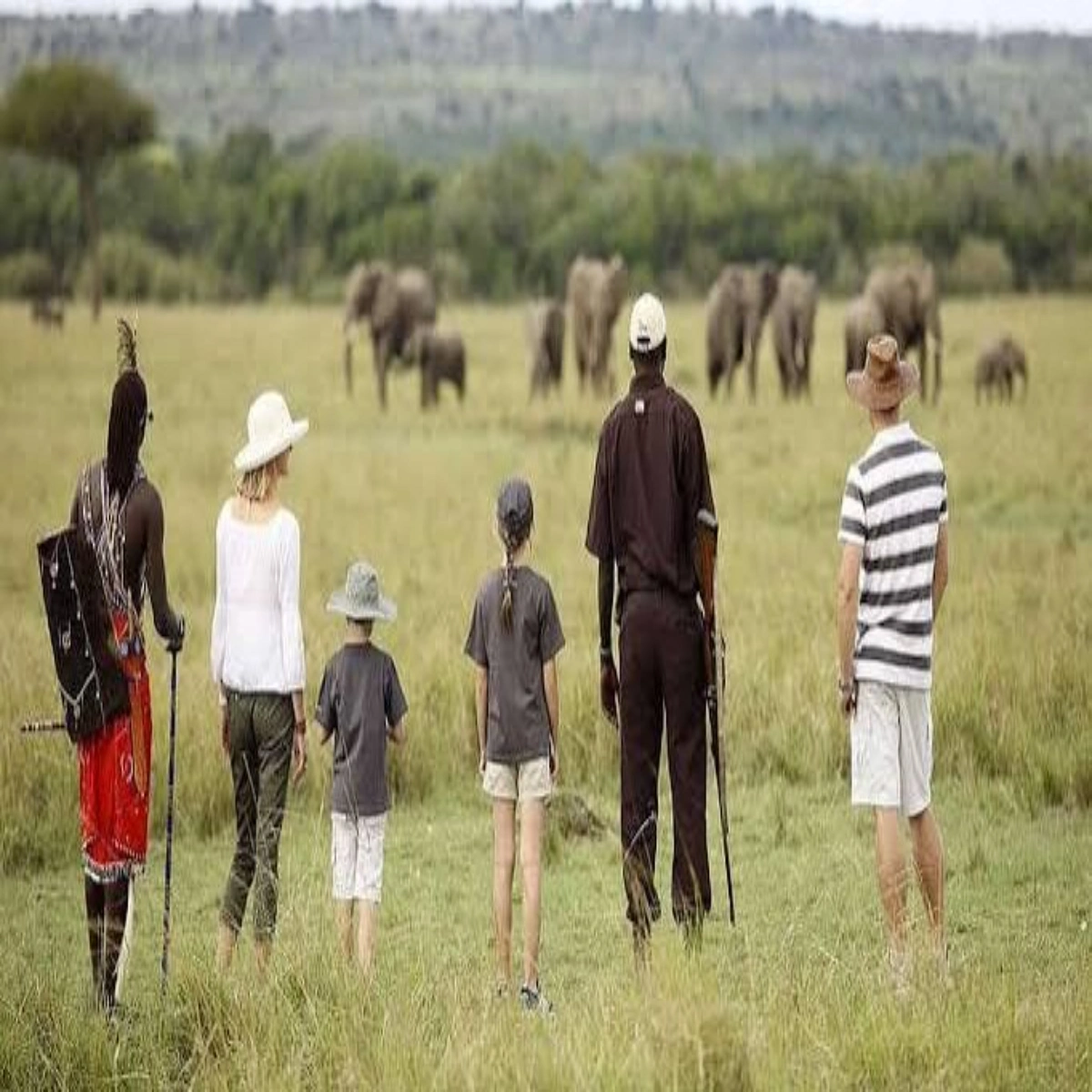
Walking Safaris: Unlike National Parks where alighting from vehicles is strictly prohibited, Samburu is a National Reserve. This administrative distinction often permits guided walking safaris and fly-camping operations, allowing for tracking-based exploration.
Cultural Authenticity: The Samburu people, pastoralists related to the Maasai, maintain a more traditional lifestyle in this region. Community-conservancy models (such as nearby Kalama or Westgate) offer integration where tourists can witness livestock management and well-digging in dry riverbeds, practically demonstrating human adaptation to semi-desert environments.
Birding Specialisation: For ornithological interests, Samburu offers over 450 recorded species. Key entities include the Vulturine Guineafowl and the Kori Bustard, focusing on ground-dwelling birds that thrive in open scrubland.
Samburu National Reserve Entry Fees and Costs
Understanding the fee structure for Samburu is important for budgeting your safari. Unlike many other Kenyan parks managed by the Kenya Wildlife Service (KWS), Samburu National Reserve is managed by the Samburu County government. This means pricing and payment systems can differ. Fees are typically valid for a 24-hour period from the time of entry.
Park Entry Fees (Per Person, Per 24 Hours)
The pricing is tiered based on residency status. Always carry identification (National ID for citizens, official resident documentation for residents, and passport for non-residents) as proof may be required at the gate.
Non-Resident Adult: This is the standard international tourist rate, typically charged in USD.
Non-Resident Child (3-17 years): Usually priced at approximately 50% of the adult non-resident fee.
East African Resident Adult/Child: For residents of Kenya, Uganda, Tanzania, Rwanda, Burundi, and South Sudan with valid documentation. This rate is significantly lower than the non-resident fee and is charged in Kenyan Shillings (KES).
Kenyan Citizen Adult/Child: The most affordable rate, reserved for Kenyan citizens and charged in KES.
Note: Prices are subject to change without notice. It is highly recommended to confirm the latest rates with your tour operator or lodge before your travel dates.
Vehicle Entry Fees
In addition to personal entry fees, a fee is also charged for any vehicle entering the reserve. This cost is calculated per vehicle, per day, and is based on the vehicle's seating capacity.
Less than 6 seats (e.g., standard 4x4): The lowest tier.
6 to 12 seats (e.g., safari van/Land Cruiser): A mid-tier rate.
13 to 24 seats: A higher rate for larger vehicles.
Other Potential Costs
Samburu Community Guide: Hiring a local Samburu guide for your vehicle is highly recommended for their extensive knowledge of the terrain and wildlife. This is an additional, direct cost.
Camping Fees: If you plan to use one of the public or special campsites, a separate nightly camping fee per person applies.
Logistics for Reaching Samburu National Reserve
Samburu is located in the arid, northern part of Kenya. Whilst it is located in a remote area, it is well-connected to the main safari circuit, primarily from Nairobi.
Getting to Samburu by Road
The journey by road provides insight into Kenya's changing geographical features, from the highlands of the Laikipia Plateau to the semi-desert of Samburu.
Route: The primary route is the A2 Highway heading north from Nairobi. You will pass towns like Thika, Nanyuki (a popular stopover near Mount Kenya), and finally Isiolo, the last major town before the reserve.
Distance: Approximately 340-350 kilometres (around 215 miles) from Nairobi's city centre.
Travel Time: Expect a driving time of 5 to 6 hours, depending on traffic leaving Nairobi and road conditions. The A2 is paved and generally in good condition up to Isiolo. The final stretch from Isiolo to the reserve gates (such as the main Archer's Post Gate) can be on rougher, unpaved roads.
Vehicle Type: A 4x4 vehicle is strongly recommended, especially for navigating the internal park roads and the final approach to the gates. Most visitors arrive in a dedicated safari vehicle with a driver-guide.
Getting to Samburu by Air
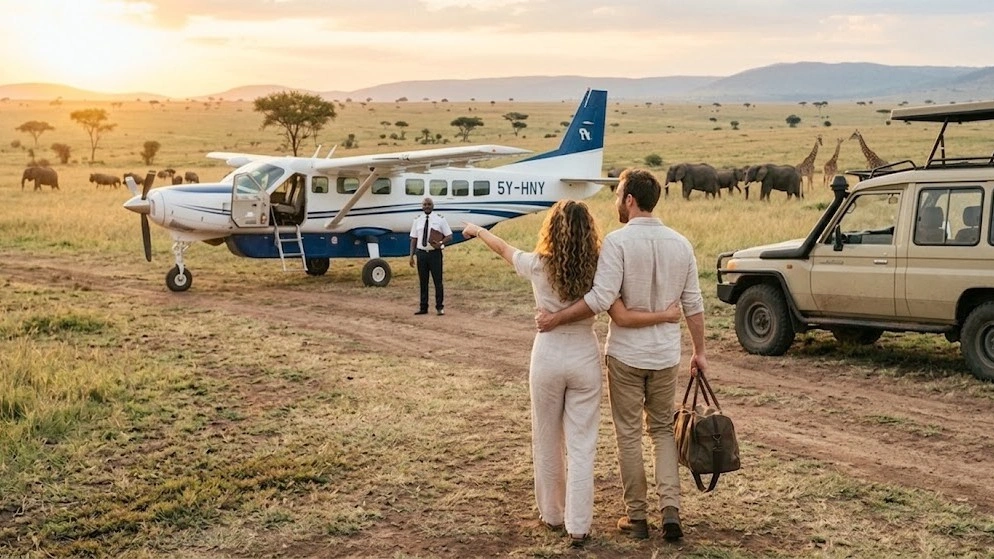
For those short on time or seeking more comfort, flying is the most efficient way to reach Samburu.
Departure Airport: Scheduled flights depart daily from Wilson Airport (WIL) in Nairobi, which is the main hub for Kenya's domestic safari flights.
Airlines: Reputable local airlines such as Safarilink and AirKenya Express operate regular services to the region.
Destination Airstrips: Flights land at various airstrips serving the reserve and its surrounding lodges, the most common being Oryx Samburu Airstrip. Other nearby airstrips include Buffalo Springs and Kalama.
Flight Time: The flight itself takes approximately 1 to 1.5 hours.
Transfers: Upon arrival, your pre-booked lodge or camp will arrange for a vehicle to collect you from the airstrip for the short transfer and your first game drive.
Important Information: The Standard Gauge Railway (SGR) train service runs between Nairobi and Mombasa. It does not serve Samburu or any destinations in northern Kenya.
Accommodation Options for Samburu National Reserve
Your choice of accommodation influences your safari experience. The primary decision is whether to stay inside the reserve's boundaries, in an adjacent reserve, or outside the main gates.
1. Inside Samburu National Reserve
Logic: These lodges and camps are situated along the banks of the Ewaso Ng'iro River, the lifeblood of the ecosystem, providing prime wildlife viewing directly from your accommodation.
Pros: Immediate access to game drives without transit times; maximises "golden hour" viewing at dawn and dusk; high chance of hearing wildlife at night.
Cons: Generally the most expensive option; you are bound by park gate opening and closing times.
Best For: First-time visitors, photographers, and those seeking a comprehensive wildlife experience.
2. In Adjacent Reserves (Buffalo Springs & Shaba)
Logic: The wildlife roams freely between these three reserves. Accommodation here provides access to the entire ecosystem.
Pros: Can sometimes offer better value than lodges inside Samburu proper; provides access to different geographical features and potentially less crowded areas.
Cons: To visit Samburu National Reserve itself, you will still need to cross a gate and pay the relevant Samburu entry fees for that day.
Best For: Visitors on a slightly longer safari who wish to explore the subtle differences across the entire conservation area.
3. Outside the Reserve Gates
Logic: These establishments cater to more budget-conscious travellers or those seeking more flexibility.
Pros: Significantly more affordable; allows for more interaction with local communities; not restricted by park opening times for your arrival or departure.
Cons: Requires daily travel into the reserve, which means paying entry fees for each day you enter; you lose valuable time at the beginning and end of each day that could be spent on safari.
Best For: Budget travellers, backpackers, and overlanders who are self-driving.
For optimal safari conditions in Samburu National Reserve, the dry seasons from January to early March and especially late June through October are highly recommended. These periods are characterized by minimal rainfall, lower humidity, and sparser vegetation, which significantly improves wildlife visibility and accessibility.