




Affordable Kenya safari packages offer the most budget-friendly way to experience Kenya's world-famous wildlife, with daily rates ranging between £130 and £220 per person. Whether you are looking for an affordable Kenya safari from the UK or evaluating cheap Kenya safari packages, these itineraries make destinations like the Masai Mara and Amboseli accessible by utilizing cost-sharing mechanics, specifically "Group Joining" transport and accommodation situated outside the national park boundaries. For travelers searching for a budget Kenya safari package, this tier prioritises financial accessibility over exclusivity without sacrificing the wildlife experience.
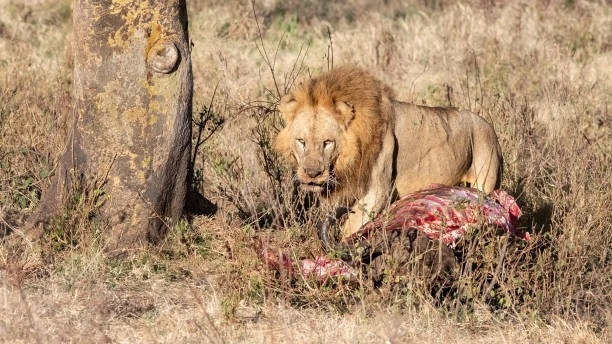
While the amenities are basic, the wildlife experience remains authentic, as you traverse the same game reserves as travellers on luxury safari holidays.
This tier prioritises financial accessibility over exclusivity. Guests should expect to travel in shared safari minivans with other tourists, stay in basic tented camps or public campsites, and follow a fixed schedule.
It is the ideal choice for solo travellers, students, and backpackers who want to see the "Big Five" without the premium price tag of private lodges or flights.
The Group Joining Model for Cost Sharing
The primary mechanic for achieving a low price point when planning a safari on a budget is the "Group Joining" model. Designed for anyone taking a Kenya safari on a shoestring, this model lets you purchase a single seat in a shared safari minivan rather than paying for an entire private vehicle. A Kenya group safari on a budget operates on a scheduled basis with guaranteed departure dates, typically leaving Nairobi in the early morning. By sharing the fixed costs of fuel, park fees, and driver wages with up to seven other passengers, travelers can stretch their Kenya safari budget significantly further than on private tours.
The vehicle carries a maximum of seven to eight passengers, each with a window seat where possible. This structure allows solo travellers and couples to split the high fixed costs of fuel, vehicle maintenance, and driver wages.
The trade-off is a loss of flexibility; the vehicle follows a strict itinerary to accommodate the group, and game drives cannot be extended or altered based on individual preference. It is a communal experience that requires patience and a willingness to interact with strangers.
Basic Camping Versus Budget Tented Camps
Accommodation options across budget safaris in Kenya fall into two distinct categories: basic camping and budget tented camps. Understanding the difference between these options is essential when searching for the best value Kenya safaris, as they offer vastly different amenities despite both falling within the lower price bracket.
Basic Camping Safaris
Basic camping involves sleeping in portable two-person dome tents pitched at designated public campsites.
This is the most rugged and affordable option available. Guests sleep on foam mattresses laid directly on the ground or on the tent floor, typically inside sleeping bags. The defining feature of this tier is the lack of private facilities.
Campers share communal ablution blocks (public toilets and showers) with other groups. Hot water is not guaranteed and electricity is generally unavailable inside the tents, requiring guests to charge devices in the vehicle or at a central mess area.
Budget Tented Camps
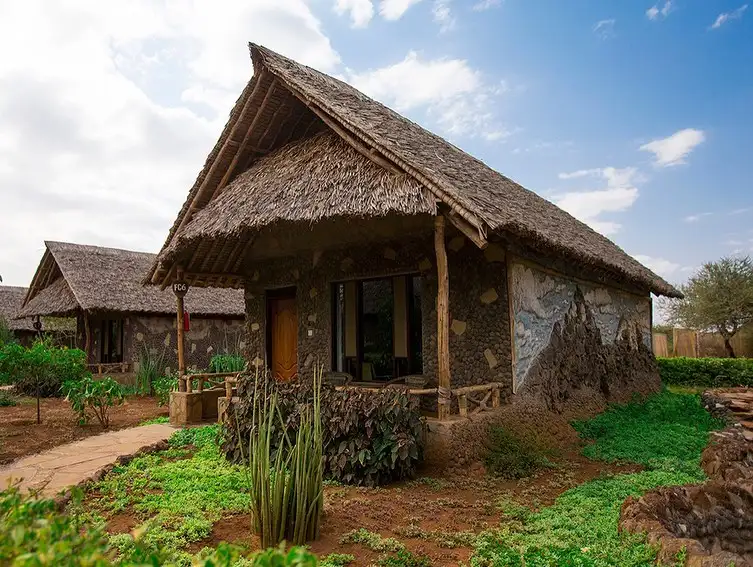
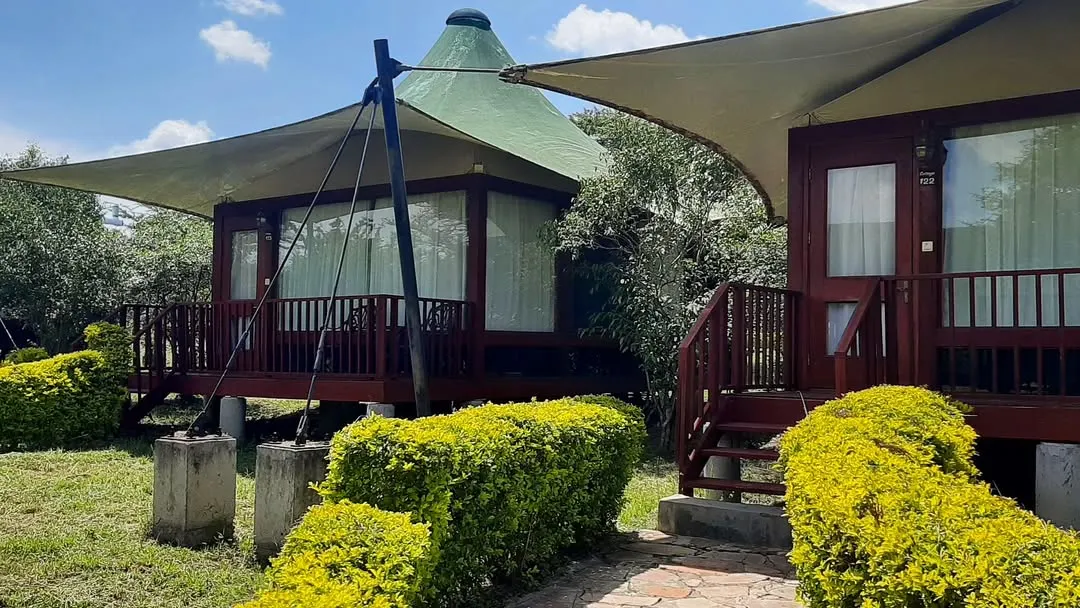
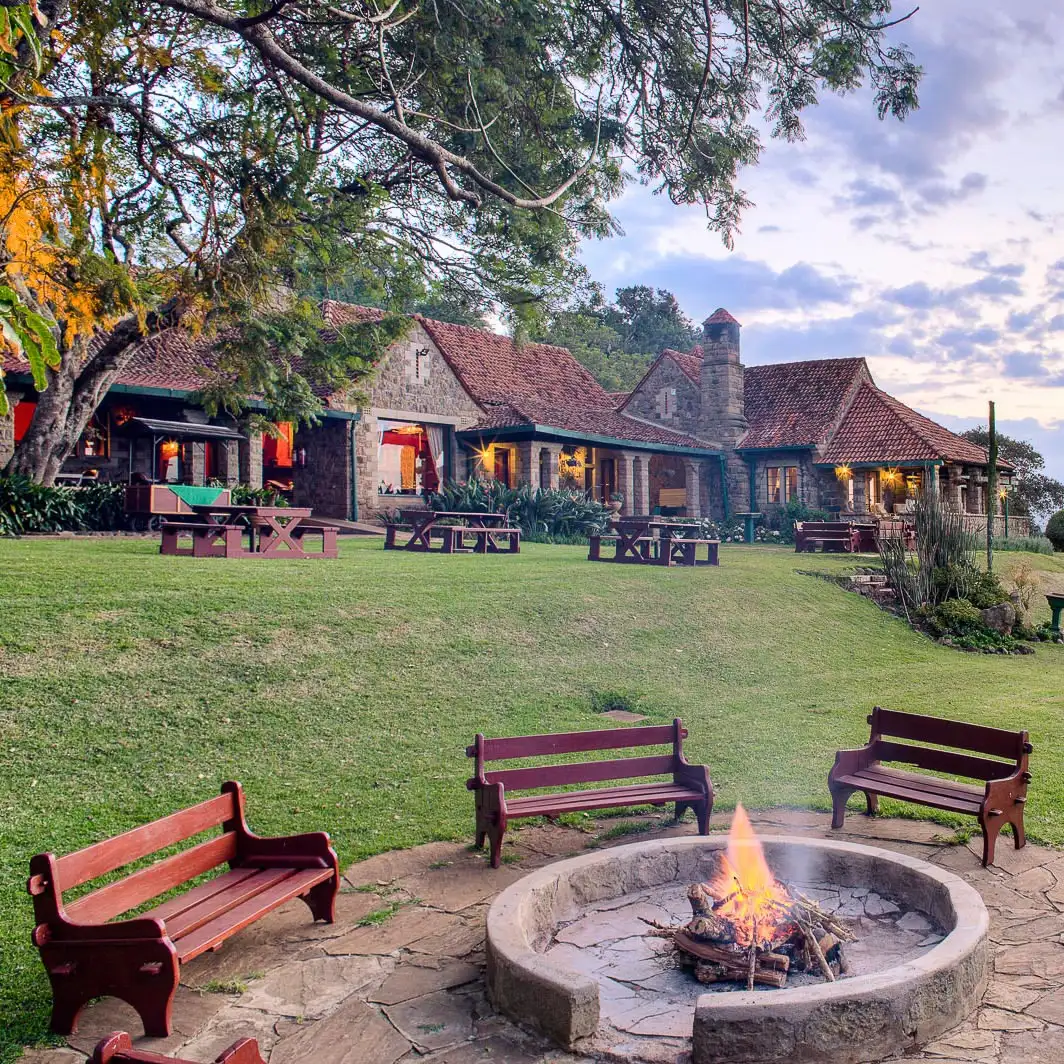
Budget tented camps offer a significant upgrade in comfort for a relatively small price increase. For those booking a Kenya budget safari, properties like Miti Mingi Eco Camp or Lenchada Tourist Camp feature permanent, walk-in canvas tents erected on concrete or stone floors.
These units come furnished with raised wooden beds, proper linens, and mosquito nets, resembling a basic hotel room with canvas walls. Crucially, these tents include private en-suite bathrooms attached to the back of the tent. Guests have their own flush toilet and a shower (often heated by a wood-fired boiler system), providing privacy and convenience that basic camping lacks.
Staying Outside the Park Gates to Save Money
Location is the primary strategic trade-off in a budget safari. To maintain low daily rates, budget camps and campsites are almost exclusively located outside the National Park boundaries.
In the Masai Mara, these camps cluster around the main entry points, such as the Sekenani or Ololaimutia Gates. In Amboseli, they are often situated near the Kimana Gate.
Staying outside the reserve avoids the high "Concession Fees" and premium land leases charged to lodges located inside the park. This location strategy significantly lowers the nightly accommodation rate.
The compromise is the daily commute. Safari vehicles must drive from the camp to the gate each morning to clear entry formalities before the game drive begins. This process can add 20 to 30 minutes of travel time compared to staying inside the reserve, meaning budget travellers must wake up earlier to reach the wildlife areas during the prime dawn viewing hours.
Transport in Shared Safari Minivans
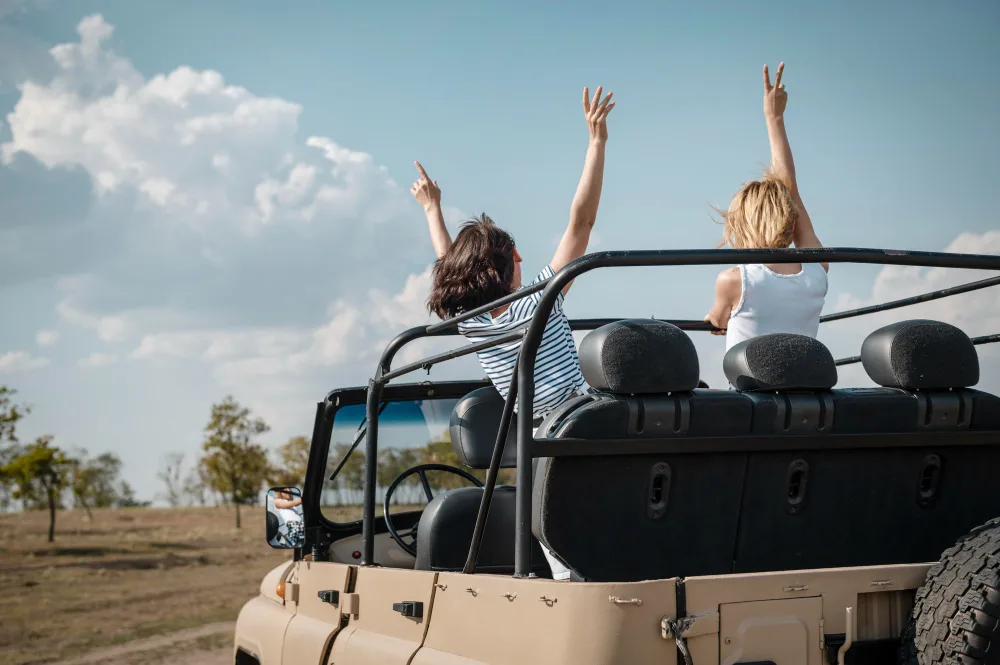
The standard transport mode for budget safaris is the Safari Minivan with a pop-up roof. These vehicles are modified Toyota Hiaces or Nissan Urvans designed to handle Kenyan road conditions while keeping operational costs low.
Unlike the Land Cruisers used in luxury tiers, minivans are two-wheel drive (with some 4WD modifications) and have lower ground clearance.
In a group joining context, the vehicle is the shared space for the duration of the trip. The vans typically seat seven to eight passengers. While the pop-up roof ensures that everyone can stand up to view wildlife once inside the park, the transit journeys between Nairobi and the reserves can be cramped if the vehicle is full. Budget operators rarely use air conditioning to save fuel, relying instead on open windows for ventilation.
The suspension is stiffer than a Land Cruiser, meaning the ride on corrugated park tracks can be bumpy.
Dining Experiences with a Safari Cook
Dining arrangements on budget safaris differ significantly from the buffet halls of mid-range lodges. The food service is functional, hearty, and designed to keep costs down.
Camping Safari Meals
On a basic camping safari, a dedicated Safari Cook travels in the vehicle with the group. This cook is responsible for buying fresh produce in local markets and preparing all meals at the campsite.
Breakfast is typically eggs, toast, and sausages; lunch is often a picnic box consumed in the park; and dinner is a hot meal (stews, rice, pasta) cooked over gas burners or an open fire. This setup allows for some flexibility but offers a limited menu.
Budget Camp Dining
Budget tented camps usually have a central dining hall that serves simple buffet-style meals. The variety is less extensive than in mid-range lodges, typically consisting of one or two meat options (beef/chicken), a starch (rice/ugali/potatoes), and vegetables.
The focus is on providing sufficient calories for the day rather than culinary excellence. Drinks are almost always an extra cost, though tap water (boiled or treated) is usually available.
What to Pack for a Budget Camping Safari
Packing for a budget safari requires more strategic planning than a lodge-based holiday because basic amenities are not guaranteed. When staying in public campsites or budget tented camps, you must be self-reliant regarding hygiene, lighting, and comfort. The luggage limit remains a consideration, but the priority shifts to practical utility items that bridge the gap between the rough infrastructure and personal comfort.
Essential items include:
- Sleeping Bag Liner: Even if you hire a sleeping bag or stay in a budget camp with linens, a silk or cotton liner ensures personal hygiene and adds a layer of warmth.
- Microfibre Towel: Budget camps often do not provide towels, or they may charge a fee. A quick-drying microfibre towel is essential for communal showers.
- Headtorch: Electricity is rarely available inside camping tents, and generators in budget camps usually switch off at 10:00 PM. A headtorch is vital for navigating to the toilet block at night.
- Toilet Paper and Sanitiser: Public campsites in the Mara or Amboseli frequently run out of supplies. Carrying your own roll and hand sanitiser is a necessary precaution.
- Power Bank: Charging points are limited to the vehicle or a communal mess area. A high-capacity power bank ensures you can keep phones and cameras charged overnight in your tent.
Comparison of Budget versus Mid Range Inclusions
Understanding the structural differences between a cheap safari in Kenya and a mid-range package is critical for managing expectations. The lower entry price of a Kenya cheap safari is achieved by removing specific layers of privacy, convenience, and location. While the wildlife viewing remains identical, you visit the same parks and see the same animals but the logistics surrounding the game drives differ significantly.
The most impactful difference is the vehicle exclusivity. Budget safaris rely on the "Group Joining" model where you share a vehicle with strangers, meaning you have no control over the schedule or the route.
Mid-range packages provide a private vehicle, allowing you to dictate the pace. Furthermore, the location strategy differs; budget tours stay outside the park gates to avoid concession fees, necessitating a daily commute, whereas mid-range lodges are situated inside the reserve, offering immediate access to wildlife.
| Feature | Budget Safari (Group) | Mid-Range Safari (Private) |
|---|---|---|
| Transport | Shared Minivan (7-8 strangers) | Private Minivan (Your group only) |
| Accommodation | Basic Camp/Tent outside the gate | Lodge/Permanent Tent inside the park |
| Bathroom | Shared communal block (Camping) | Private En-suite (Lodge) |
| Dining | Set Menu / Camp Cook | Extensive Buffet |
| Flexibility | Fixed schedule (Group consensus) | Flexible (You decide timing) |
Safety and Security in Public Campsites for Bugdget Holidays in Kenya
Safety in public campsites is a common concern for first-time budget travellers. Campsites in the Masai Mara and Amboseli are designated areas managed by park authorities. They are typically guarded 24 hours a day by armed rangers (Askaris) who patrol the perimeter to deter large predators and ensure visitor safety. While the camps are not always fenced, the presence of rangers provides a secure environment for sleeping in dome tents.
However, visitors must adhere to strict protocols regarding food storage. Baboons and monkeys are habituated to campsites and will raid tents if they smell food. It is imperative to lock all snacks and fruit in the safari vehicle rather than keeping them in your tent.
At night, smaller scavengers like genets or hyenas may patrol the grounds looking for scraps. Travellers should always zip their tents fully and use a torch when walking to the ablution blocks. Regarding personal valuables, the rule of thumb on a budget safari is to keep cameras, passports, and money in your daypack with you at all times, rather than leaving them unattended in a tent.